

SKF Bearing Tolerance Classes per EN ISO 492: Wholesale Supplier & Cross-Reference Guide
Matching model numbers across brands will not save your spindle if the tolerance class is wrong.
SKF bearing tolerance classes—PN, P6, P5, P4, P2—define the radial and axial runout limits per EN ISO 492, and they directly govern rotational accuracy, heat generation, and service life. Selecting the correct SKF bearing tolerance class is the single most overlooked variable in cross-brand interchange, and ignoring it turns a "correct model" into a premature failure.
I still remember the morning a maintenance supervisor from a crushing plant on the coast of Santos slammed a seized 22320 spherical roller bearing onto my desk. The model number matched the purchase order exactly. What did not match was the tolerance class: the original specification called for PN, but the replacement batch arrived in P6, tightening the internal clearance band enough to eliminate the thermal expansion margin under continuous shock loading. The bearing ran hot within weeks and locked the spindle within months. The buyer had cross-referenced the model, but nobody had cross-referenced the SKF bearing tolerance classes. That single oversight cost the plant a full production shutdown and a replacement cycle that should have lasted years. [NEED_CITE: EN ISO 492 tolerance class definitions for radial rolling bearings]

Let me walk you through how these classes are structured, how to read them on a drawing, how to cross-reference them safely, and how to verify what actually arrives at your warehouse.
What Are SKF Bearing Tolerance Classes?
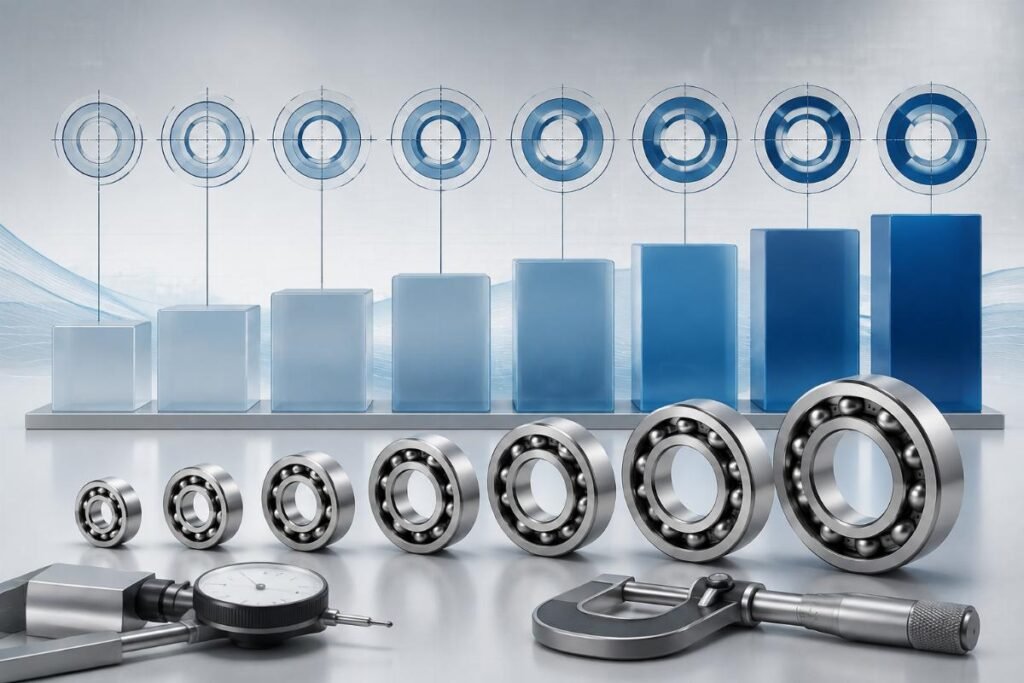
Tolerance classes are standardized bands of dimensional and geometrical accuracy, not marketing labels. Under EN ISO 492, radial rolling bearings are grouped into classes that tighten progressively from PN (Normal) up to P6, P5, P4, and P2. Each step narrows the permissible limits for bore diameter, outside diameter, width, radial runout of inner and outer rings, and axial runout of the inner ring face. [NEED_CITE: ISO 492 tolerance class hierarchy for radial bearings]
The hierarchy works in reverse of what many buyers intuitively expect: a lower suffix means higher precision. PN is the default for general industrial use. P6 and P5 serve medium-to-high speed applications such as electric motors and gearboxes. P4 and P2 are reserved for precision spindles, machine tool main shafts, and high-speed turbomachinery where even a few microns of runout translate into surface finish defects or vibration alarms.
| Tolerance Class | Typical Application Range | Precision Level |
|---|---|---|
| PN (Normal) | General industry, conveyors, heavy-duty crushers | Standard |
| P6 | Motors, pumps, gearboxes above moderate speed | Above Standard |
| P5 | High-speed motors, precision gearboxes | High |
| P4 | Machine tool spindles, precision instruments | Very High |
| P2 | Ultra-precision spindles, aerospace-grade shafts | Ultra-High |
A Latin American steel mill once ordered a full set of tapered roller bearings for a continuous caster line. The OEM drawing specified P5. The local distributor substituted what they called "equivalent precision" from another brand, but the tolerance band on the inner ring bore was one step wider than P5. Within a single campaign, the caster segments showed uneven wear patterns traceable to shaft deflection that the wider tolerance band could not control. [NEED_CITE: SKF technical documentation on tolerance class selection by application]
The point is not that the substitute brand was inferior in general—it is that tolerance classes are not interchangeable by name alone. You must verify the actual band against the EN ISO 492 table, not the suffix on the box.
How to Read SKF Tolerance Class Markings?
The tolerance class lives in the suffix, and the suffix is non-negotiable. On an SKF bearing, the class appears as a suffix directly after the basic designation: for example, 6206-2RZ P5 or 22320 EJA C3. If no tolerance suffix is printed, the bearing is manufactured to PN by default. [NEED_CITE: SKF designation system for rolling bearing suffixes]
Reading the marking correctly requires attention to two separate suffix groups that buyers routinely merge:
- Tolerance class suffix: P6, P5, P4, P2 (sometimes combined with running accuracy suffixes like VH for modified internal geometry in super-precision bearings).
- Internal clearance suffix: C2, C3, C4, C5, or no suffix (which means CN, i.e., normal clearance).
These two systems are independent. A P5 bearing can carry C3 clearance; a PN bearing can carry C4 clearance. Confusing the two is the most common root cause of "correct model, wrong fit" complaints.
On the shop floor, I have seen maintenance teams order a "P5" replacement for a high-speed motor, receive a bearing that was indeed P5 in tolerance, but with CN clearance instead of the specified C3. The motor ran, but the thermal growth of the shaft eliminated the clearance entirely within hours, and the bearing overheated. The tolerance class was right; the clearance class was not. Both suffixes must be checked. [NEED_CITE: SKF guidance on matching tolerance class with internal clearance group]

When you receive a shipment, pull a sample and read the suffix on both the bearing itself (laser-marked on the ring face or outer ring) and the box label. If the two do not match, or if the tolerance suffix is missing entirely, the batch has been mixed or mislabeled.
Why Cross-Reference Must Match Tolerance, Not Just Model Number?
A model number is a dimensional envelope, not a precision guarantee. When you cross-reference an SKF 22320 to an equivalent from another manufacturer, the basic dimensions—bore, outside diameter, width—will match because all major brands follow ISO 15 for boundary dimensions. But the tolerance band within that envelope, and the internal clearance group, can differ between brands for the same suffix.
This is where the real risk sits. Consider a Middle East mining operator who sourced replacement spherical roller bearings for a vibrating screen from a new supplier. The model number matched. The suffix said PN. But the actual radial internal clearance measured on arrival fell at the tight end of the PN band, while the original SKF units sat at the loose end. Under the screen’s high-amplitude vibration, the tighter clearance generated excessive friction heat, and the bearings failed well before the expected campaign length. [NEED_CITE: cross-brand tolerance band comparison per EN ISO 492]
This is exactly the kind of mismatch our cross-reference service is built to catch. When a buyer sends us an OEM part number or an existing brand’s full designation, we do not just pull the equivalent model from another brand’s catalog. We pull the EN ISO 492 tolerance table for both the source and the target, align the radial and axial runout bands, and confirm that the internal clearance group maps correctly. If the target brand’s PN band is narrower or wider than SKF’s PN band for that size range, we flag it and recommend stepping up or down a class accordingly.
The same discipline applies in reverse. A European distributor once asked us to source an NSK angular contact bearing to replace an SKF P4 unit on a grinding machine spindle. The NSK model was dimensionally identical, but the NSK tolerance class for that specific suffix ran to a slightly different ABMA-style band rather than strict ISO 492. Without realigning the tolerance class on paper before ordering, the spindle would have been assembled with a bearing whose axial runout limit did not match the machine’s original specification. [NEED_CITE: ABMA Std 20 versus ISO 492 tolerance comparison for angular contact bearings]

Our interchange charts for SKF, NSK, FAG, TIMKEN, NTN, and KOYO always carry the tolerance class column alongside the model number column, because that is the only way to guarantee that "equivalent" actually means equivalent in performance, not just in outline drawing.
How to Select the Right Tolerance Class for Your Application?
Start from the operating speed and the required rotational accuracy, not from the price list. The tolerance class you choose must be able to hold the shaft’s runout within the limits your application demands, under the thermal and load conditions the bearing will actually see.
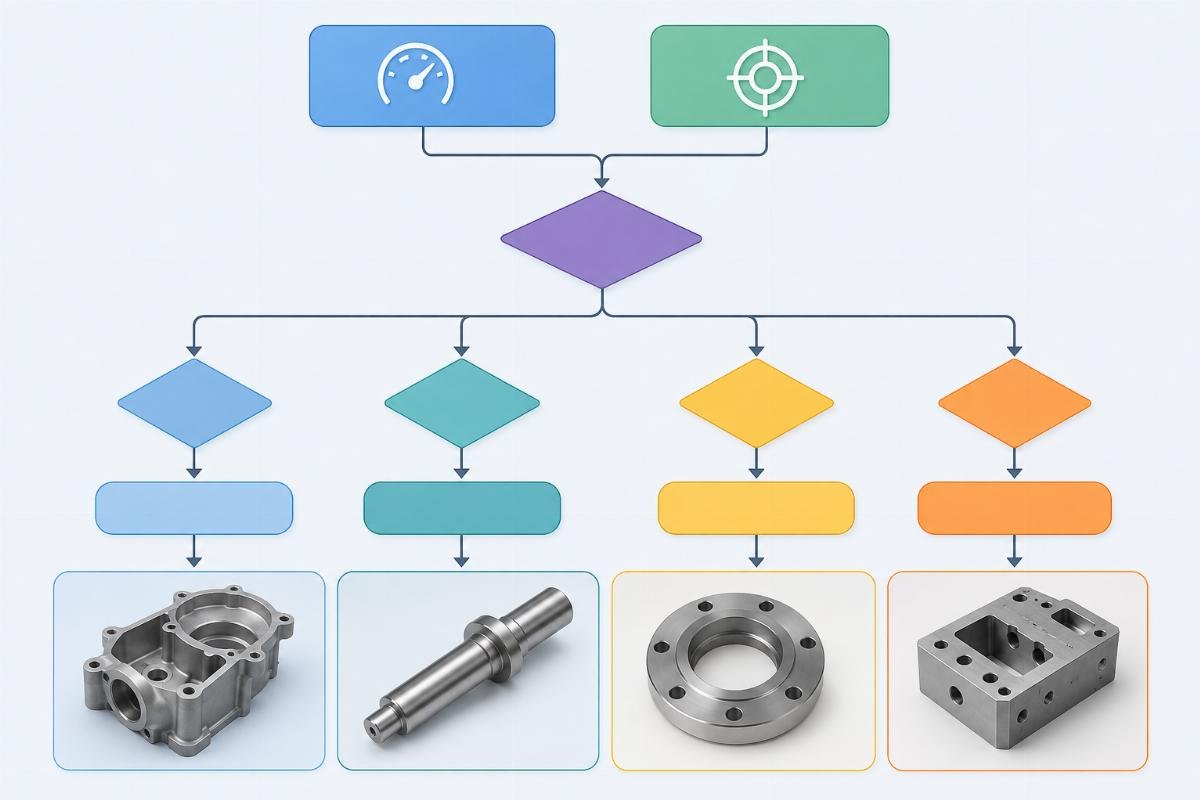
The selection logic follows a short sequence:
- Define the rotational accuracy requirement. Machine tool spindles that must hold sub-micron surface finish need P4 or P2. General industrial drives that only need to transmit torque without vibration complaints can run on PN. [NEED_CITE: SKF application guide for tolerance class selection by speed and accuracy]
- Identify the operating speed range. As speed rises, the centrifugal forces on rolling elements and the thermal growth of the rings amplify the effect of any initial runout. A bearing that is acceptable at low speed in PN may generate destructive vibration at high speed unless moved to P5 or P4.
- Match the internal clearance group to the fit and thermal regime. A tightly fitted inner ring on a hot shaft needs C3 or C4 clearance to survive thermal growth. A lightly loaded, cold-running application may benefit from C2 to improve rigidity. The clearance group must be selected together with the tolerance class, not after it.
- Confirm the housing and shaft seat tolerances. A P5 bearing mounted in a housing bore that is only machined to IT6 will waste the bearing’s precision. The seat tolerances must be stepped up in parallel with the bearing class. [NEED_CITE: SKF recommendations for shaft and housing seat tolerances by bearing class]
A power generation client in Southeast Asia upgraded their forced-draft fan motors from PN to P6 bearings after repeated early failures. The motors ran at a speed where PN-level runout was enough to excite the rotor’s critical frequency. After moving to P6, with matched C3 clearance and tightened shaft seats, the vibration levels dropped noticeably and the maintenance interval extended substantially. The bearing cost per unit rose modestly; the cost of each unplanned outage was orders of magnitude higher.
The mistake I see most often is choosing the tolerance class based on what the previous bearing happened to be, rather than what the application actually needs. If the previous bearing failed early, copying its class just repeats the failure.
How to Verify Tolerance Class Upon Delivery?
Trust the paperwork, then verify the paperwork against the physical bearing. When a shipment of precision-class bearings arrives, the first line of defense is the manufacturer’s inspection certificate. A legitimate certificate will state the bearing designation, the tolerance class suffix, the measured values for bore, outside diameter, width, and at least the radial runout of the inner and outer rings, all referenced against EN ISO 492 limits. [NEED_CITE: EN ISO 492 inspection parameter requirements for tolerance class certification]
If the certificate is missing, or if it only lists "conforms to standard" without actual measured values, treat the batch as unverified.
The second line of defense is physical cross-checking:
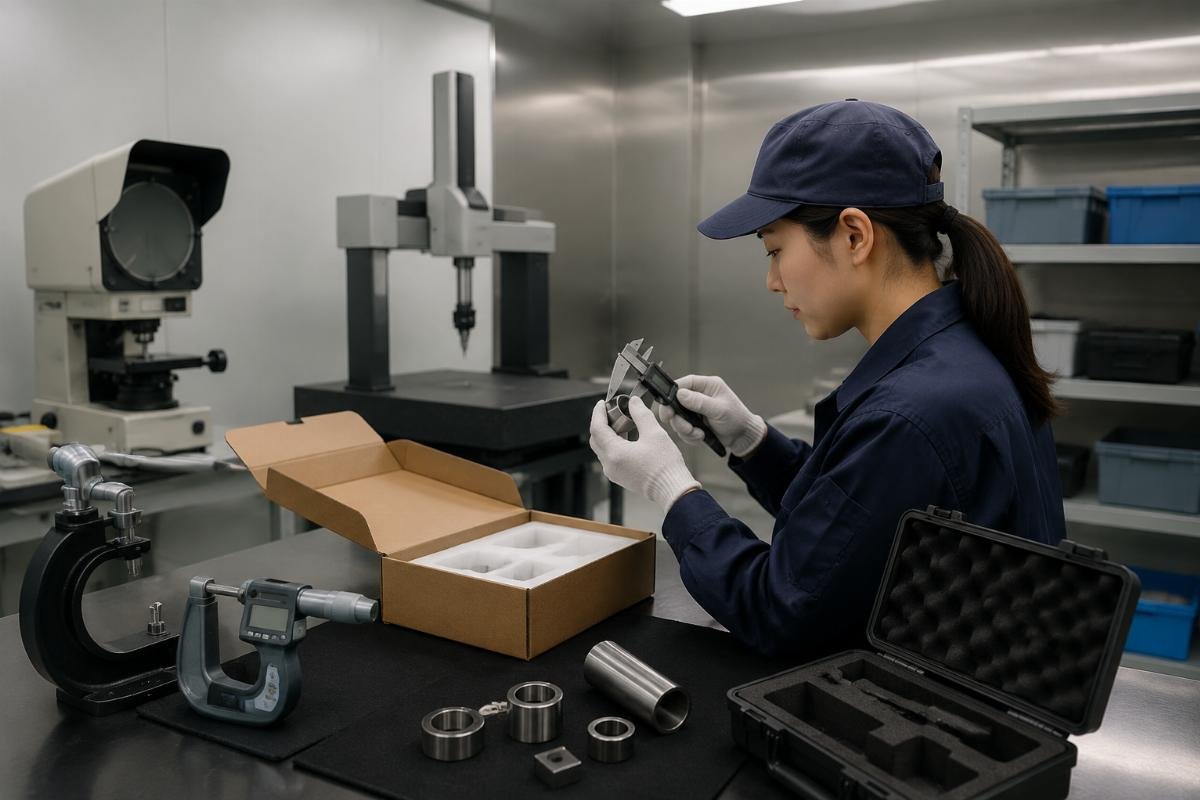
- Read the marking on the bearing ring. The tolerance suffix should be laser-etched or stamped on the ring face or the outer ring circumference. Compare it to the box label and to the certificate.
- Measure the radial internal clearance on a sample using a feeler gauge or a dedicated clearance measuring instrument, and confirm that it falls within the specified group (C2, C3, CN, C4, etc.) for that bearing size.
- Verify authenticity through the manufacturer’s traceability system. SKF, for example, provides QR codes and digital verification tools on genuine packaging. A bearing that passes the physical measurement but fails the authenticity check is still a liability.
A West African cement plant received a batch of spherical roller bearings that looked correct on the box. The suffix said P6. But when the maintenance team measured the radial runout of the inner ring on a dial indicator, the values sat comfortably inside the PN band, not the P6 band. The supplier had packed PN-class bearings into P6-labeled boxes. Without that measurement step, those bearings would have gone into the kiln drive, where the tighter P6 runout limit was essential for the operating speed. [NEED_CITE: field verification methods for bearing tolerance class per ISO 15243]
This is where our authenticity verification and authorized-channel sourcing service adds real value. We do not just ship a bearing that matches the model number. We confirm the origin, pull the tolerance class documentation from the manufacturer’s records, and, where requested, provide pre-shipment measurement reports so that the receiving team can compare the certificate to the physical bearing before installation begins.
Conclusion
Tolerance class is the silent variable that turns a correct model number into a working bearing or a seized spindle. SKF bearing tolerance classes from PN through P2 are defined by EN ISO 492, and they must be matched not only to the application’s speed and accuracy demands, but also to the internal clearance group, the shaft and housing seat tolerances, and—critically—the actual tolerance bands of any substitute brand in a cross-reference. Reading the suffix, verifying the certificate, measuring the runout, and confirming authenticity before installation are not optional steps; they are the only way to ensure that the bearing you ordered is the bearing you installed.



Leave a Reply