


SKF Bearing CE Marking EN Certification Wholesale Supplier
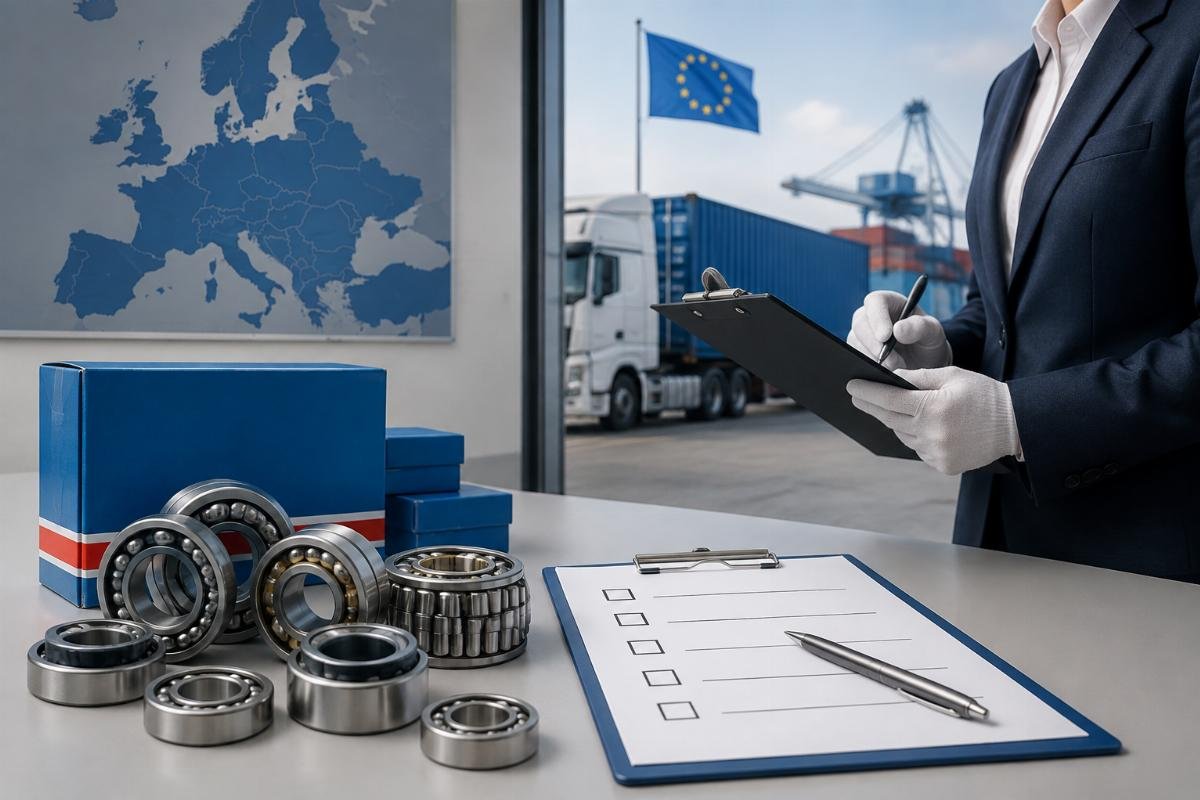
SKF bearings themselves do not carry a CE mark—because bearings are components, not standalone machinery under EU Directive 2006/42/EC. What EU buyers actually need is a valid EN standard compliance statement tied to the final machine assembly, plus traceable material certificates per batch. Requesting a generic "CE certificate" from your SKF bearing CE marking wholesale supplier is the single most common mistake that triggers customs delays at Rotterdam, Hamburg, and Piraeus.
I learned this the hard way. A European MRO buyer once forwarded me a "CE certificate" from a previous vendor—turned out it was an ISO 9001 quality management system certificate with a CE logo photoshopped onto the header. The shipment sat in a bonded warehouse for weeks while the buyer scrambled to get the correct paperwork from an SKF bearing CE marking wholesale supplier who could actually provide EN 10204 3.1 material test reports. That delay cost them a production line shutdown window they could never recover. The lesson stuck: compliance documents for bearings are not about the bearing itself—they are about proving the bearing fits into a CE-marked machine’s bill of materials without introducing a weak link. [NEED_CITE: scope of Machinery Directive 2006/42/EC regarding components versus complete machines]

Here is what every industrial buyer and distributor needs to understand before placing an order.
Do SKF Bearings Actually Need CE Marking?
No—SKF bearings, like all rolling bearings, fall outside the direct scope of CE marking requirements because they are classified as components rather than complete machinery. The CE mark applies to machines and equipment placed on the EU market as functional units. A deep groove ball bearing or a spherical roller bearing, sitting in its original factory packaging, is not a "machine" under the directive. [NEED_CITE: EU Machinery Directive 2006/42/EC definition of machinery versus components]
However, this does not mean bearings escape regulatory attention entirely. When an SKF bearing is installed into a pump, a conveyor drive, a wind turbine gearbox, or any other CE-marked machine, the machine manufacturer must declare that all critical components—including bearings—conform to relevant harmonized EN standards. The bearing manufacturer’s role is to supply the documentary evidence that makes this declaration possible. This is where the confusion begins. Many buyers contact an SKF bearing CE marking wholesale supplier expecting a "CE certificate for the bearing," when what they actually need is a Declaration of Conformity referencing specific EN standards that the bearing meets, along with material traceability documentation.
A Middle East distributor once arranged a transshipment of SKF tapered roller bearings through Rotterdam, bound for a North African mining operation. The original supplier provided a self-issued "CE compliance letter" that mentioned no specific EN standard, carried no batch traceability, and was printed on generic letterhead. Dutch customs flagged the shipment for inspection. The goods were held pending verification, and the distributor had to fly in documentation from the manufacturer’s European compliance office—a process that took weeks and required the involvement of an SKF bearing CE marking wholesale supplier with direct access to the manufacturer’s certification chain. [NEED_CITE: EU customs enforcement procedures for bearing imports lacking proper EN standard documentation]
The practical takeaway: never accept a standalone "CE certificate" for a bearing as sufficient. Instead, request the specific EN standard references, the material test certificates, and the authorization chain linking the bearing batch back to the manufacturer’s quality system.
Which EN Standards Apply to SKF Bearings in EU?
The relevant EN standards for SKF bearings in the EU market fall into two categories: performance and condition monitoring standards, and material verification standards. Neither category produces a "CE certificate" for the bearing itself, but both are essential for the machine builder’s compliance declaration.
The first key standard is EN ISO 15243, which defines the classification system for rolling bearing damage and failure mechanisms. This standard does not certify a bearing as "compliant"—rather, it provides the vocabulary and diagnostic framework that maintenance engineers and reliability teams use across the EU to analyze bearing performance in the field. When a European wind farm operator reports a bearing failure, the root cause analysis report will reference EN ISO 15243 categories such as fatigue spalling, abrasive wear, or corrosion damage. [NEED_CITE: EN ISO 15243 rolling bearing damage classification categories and their application in field failure analysis]
The second critical standard is EN 10204, which governs the types of inspection documents that steel and metallic product manufacturers must provide. This standard defines several certificate types, and the distinction between them matters enormously for procurement:
| Certificate Type | Description | Typical Availability |
|---|---|---|
| Type 2.1 | Statement of compliance by the manufacturer, non-specific to batch | Basic level |
| Type 2.2 | Statement of compliance with test results, manufacturer’s own testing, non-specific to batch | Basic level |
| Type 3.1 | Independent inspection agent verifies test results against specific batch | Verifiable |
| Type 3.2 | Independent inspection agent and manufacturer’s authorized representative both sign off on specific batch | Verifiable |
For SKF bearings entering the EU market, an EN 10204 Type 3.1 certificate is the minimum documentation that serious industrial buyers and distributors should accept. This certificate ties the chemical composition and mechanical properties of the bearing steel to a specific production batch, providing the traceability that EU machine manufacturers need for their own CE declarations. [NEED_CITE: EN 10204 inspection certificate types and their relevance to bearing steel material verification]
A Latin American importer once received a bulk order of SKF spherical roller bearings where the supplier could only provide Type 2.1 statements—generic compliance declarations with no batch-specific test data. The importer’s end customer, a European steel mill operating under strict quality management requirements, rejected the shipment outright. The importer then had to source replacement bearings from an SKF bearing CE marking wholesale supplier who could provide full Type 3.1 certificates with independently verified test results for each batch. The original order became dead stock. [NEED_CITE: EN 10204 Type 3.1 certificate requirements for bearing steel in EU industrial applications]
Additionally, buyers should be aware of EN ISO 15243’s role in condition monitoring programs. Many European maintenance contracts now specify that bearing replacement decisions must follow EN ISO 15243 diagnostic categories. This means the SKF bearing CE marking wholesale supplier you work with should be able to provide not just the bearing, but also technical documentation that maps the bearing’s specifications to EN ISO 15243 condition monitoring parameters.

What Documents Should Buyers Request from Suppliers?
Every SKF bearing shipment destined for the EU market should be accompanied by three categories of documentation: material traceability certificates, authorization chain proof, and origin identification records. Requesting these documents upfront—not after the goods arrive at the port—is the single most effective way to avoid compliance failures.
The first document is the EN 10204 Type 3.1 material certificate. As discussed above, this certificate provides batch-specific chemical composition and mechanical property test results, verified by an independent inspection body. Without it, the machine builder cannot include the bearing in their CE technical file with confidence. When you approach an SKF bearing CE marking wholesale supplier, specify that you need Type 3.1 certificates for every batch in your order—not a blanket certificate covering multiple production runs.
The second document is the authorized distributor certificate or letter of authorization from the manufacturer. This document confirms that the supplier is part of the manufacturer’s official distribution chain and has the authority to sell genuine products bearing the manufacturer’s trademark. In the EU market, customs authorities and end users increasingly scrutinize the authorization chain, especially for high-value brands. A supplier who cannot produce a current authorization letter is a red flag, regardless of how competitive their pricing may be. [NEED_CITE: manufacturer authorization documentation requirements for branded bearing distribution in EU markets]
The third document is the certificate of origin. This identifies the country where the bearings were manufactured, which affects import duty rates under EU trade agreements and is also relevant for sanctions compliance and supply chain transparency regulations. Some buyers assume that all SKF bearings are made in Sweden—this is not accurate, as SKF operates production facilities across multiple countries. The certificate of origin clarifies the actual manufacturing source.
A European automotive Tier-1 supplier once placed a reorder of SKF angular contact ball bearings for their spindle assembly line. The previous shipment had arrived with complete documentation, but this reorder came from a different sales representative at the same trading company. The new representative provided only a commercial invoice and a packing list—no material certificates, no authorization letter, no origin documentation. The buyer’s quality department blocked the goods from entering the production warehouse until an SKF bearing CE marking wholesale supplier with full document chain capability stepped in and provided the missing paperwork within days. The delay could have been avoided entirely if the buyer had specified document requirements in the purchase order from the start. [NEED_CITE: documentation requirements for branded bearing imports into EU automotive supply chains]
When working with a supplier who specializes in genuine-brand bearing sourcing and cross-reference support, the document verification process becomes significantly smoother. A capable SKF bearing CE marking wholesale supplier should be able to provide cross-referenced documentation that maps your requested bearing to equivalent models from other major brands—NSK, FAG, TIMKEN, NTN, and KOYO—while maintaining full traceability for each option. This is particularly valuable when supply chain disruptions make one brand temporarily unavailable, and you need to qualify an alternative without restarting the entire compliance documentation process.
How to Verify SKF Bearing Authenticity and Certification?
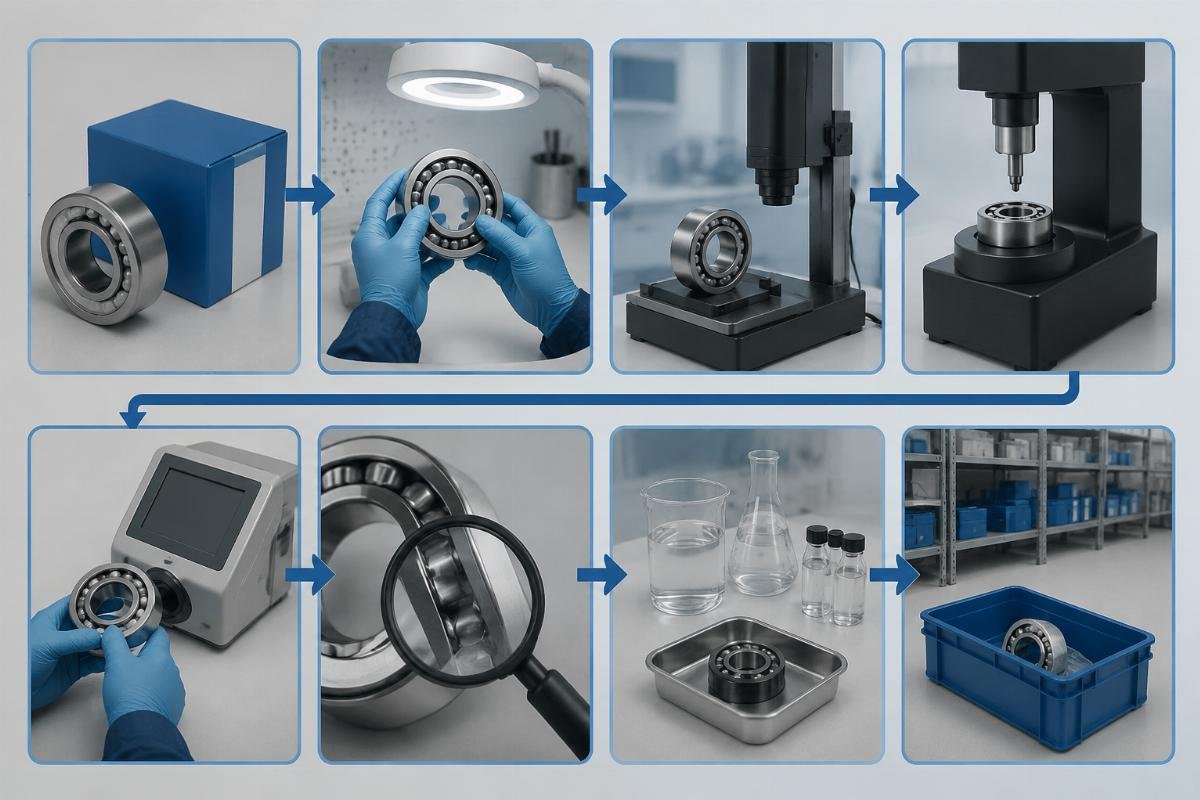
Authenticity verification and certification verification are two separate processes, and both must be completed before accepting a bearing shipment. A bearing can be genuinely manufactured by SKF yet still arrive without the proper compliance documentation—or it can be counterfeit with forged documents that look convincing at first glance.
The first step is to verify the supplier’s authorization status. SKF maintains an official network of authorized distributors and dealers, and this list is publicly accessible through their corporate website. Before placing an order, cross-reference your supplier’s company name and location against SKF’s official dealer locator. If the supplier does not appear on the list, request a written explanation and supporting documentation showing their connection to the authorized channel. [NEED_CITE: SKF official authorized distributor verification process and dealer locator tool]
The second step is to inspect the bearing packaging and markings upon receipt. Genuine SKF bearings feature specific marking conventions on both the outer packaging and the bearing itself, including the SKF trademark, the complete bearing designation, the country of manufacture, and a date code. Counterfeit bearings often have markings that are slightly off—misspelled words, incorrect font sizes, or missing elements. The bearing’s internal appearance also matters: genuine SKF bearings use controlled nitrogen infusion processes in their steel production, resulting in substantially lower inclusion density compared to counterfeit products. [NEED_CITE: SKF bearing authenticity identification markers and packaging verification methods]
The third step is to verify the documentation chain. Take the EN 10204 Type 3.1 certificate provided by your SKF bearing CE marking wholesale supplier and cross-check the batch number, test results, and inspection body credentials. The inspection body named on the certificate should be an accredited third-party organization—not the supplier’s own quality department. If the certificate lists the supplier as both the issuer and the inspector, it is effectively a Type 2.2 document, not a true Type 3.1.
A Central Asian distributor once received a shipment of SKF deep groove ball bearings with what appeared to be complete documentation. The EN 10204 certificate looked official, the authorization letter bore a recognizable logo, and the certificate of origin listed a plausible manufacturing country. However, when the distributor’s technical team examined the bearings under magnification, they noticed that the cage rivet pattern did not match SKF’s standard design for that specific model. Further investigation through SKF’s authentication service confirmed the bearings were counterfeit—the documents had been fabricated to match. The distributor had to scrap the entire shipment and source replacements from a verified SKF bearing CE marking wholesale supplier with a documented chain back to SKF’s production facilities. [NEED_CITE: SKF anti-counterfeit authentication tools and bearing physical inspection criteria]
Working with a supplier who offers authenticity verification as a core service—rather than an afterthought—dramatically reduces this risk. A professional SKF bearing CE marking wholesale supplier should proactively offer verification support, including access to the manufacturer’s authentication database, physical inspection guidance, and document cross-referencing against known counterfeit patterns.
Common Pitfalls When Importing SKF Bearings to Europe?
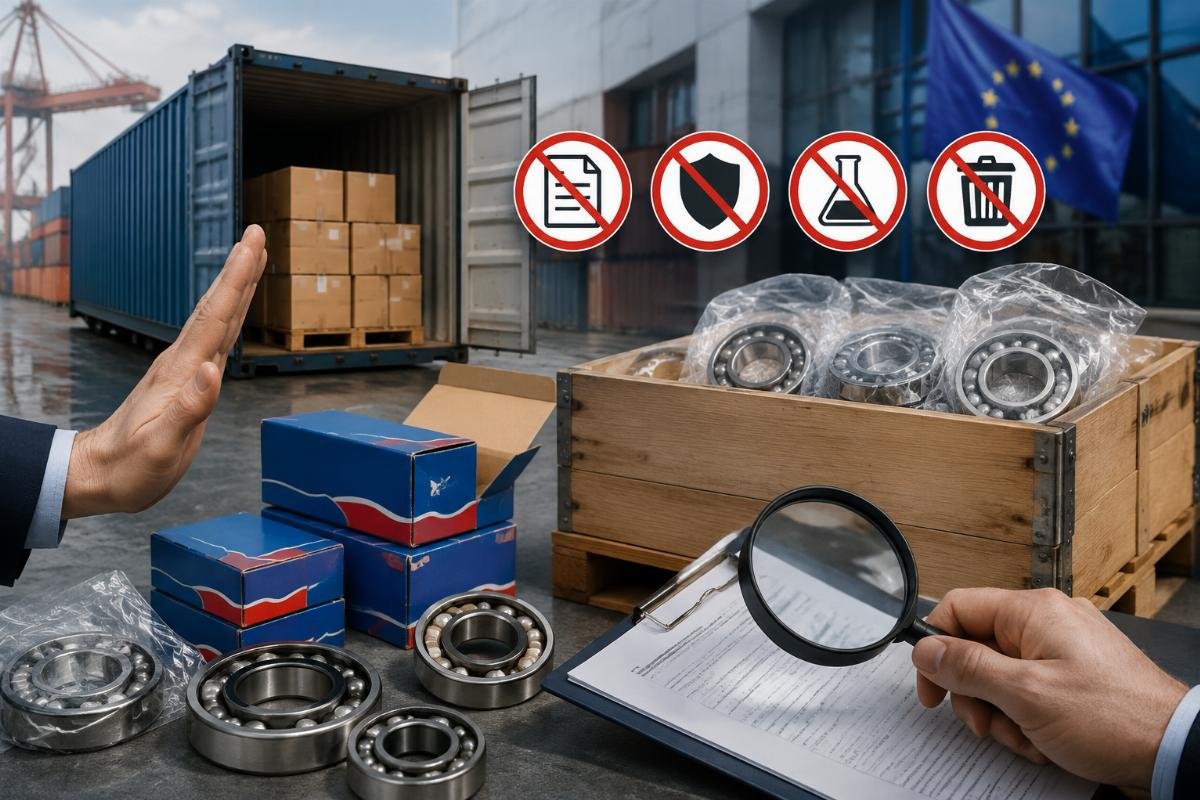
The three most frequent compliance failures when importing SKF bearings into Europe are certificate confusion, document chain gaps, and counterfeit infiltration through unauthorized channels. Each of these pitfalls has distinct warning signs, and each can be avoided with proper due diligence before the order is placed.
The first pitfall is certificate confusion. Many buyers—especially those new to EU procurement—assume that any document with a "CE" logo constitutes valid CE marking compliance. As established earlier, bearings do not carry CE marks. When a supplier offers a "CE certificate" for a bearing, it is almost certainly either an ISO 9001 quality management certificate mislabeled as product compliance, or a self-issued declaration that references no specific EN standard. An experienced SKF bearing CE marking wholesale supplier will never offer a standalone CE certificate for a bearing; instead, they will provide the EN standard compliance statements and material certificates that the machine builder needs. [NEED_CITE: common documentation errors in bearing import compliance for EU market]
The second pitfall is document chain gaps. A supplier may be able to provide genuine bearings but fail to provide the supporting documentation—particularly EN 10204 Type 3.1 certificates—for every batch in a large order. This often happens when a trading company sources bearings from multiple warehouses or sub-suppliers and cannot guarantee consistent documentation across all batches. The result is a partial shipment that passes customs but leaves the buyer unable to complete their CE technical file for the end machine. Always specify in your purchase order that every batch must be accompanied by its own Type 3.1 certificate, and confirm this requirement with your SKF bearing CE marking wholesale supplier before production or shipment.
The third pitfall is counterfeit infiltration. The EU market—particularly ports serving Southern and Eastern Europe—has seen a noticeable increase in counterfeit bearing shipments in recent years. These counterfeits often enter through unauthorized trading companies that source from gray market channels where genuine and fake products are mixed. The counterfeits may look identical on the outside and may even pass basic dimensional checks, but their internal material quality falls substantially short of SKF’s standards. Under sustained industrial loads, counterfeit bearings exhibit delayed fatigue crack initiation resistance compared to genuine products, leading to premature failures that can cost several times the original purchase price in downtime and replacement expenses. [NEED_CITE: counterfeit bearing failure rate comparison in EU industrial applications]
A European MRO buyer once sourced SKF cylindrical roller bearings from a supplier who offered prices noticeably below market average. The bearings arrived with documentation that appeared complete, and the buyer installed them across a production line. Within months, multiple bearings showed abnormal vibration signatures consistent with EN ISO 15243 fatigue spalling classifications—far earlier than expected for genuine SKF products in that application. Root cause analysis revealed material hardness values outside the acceptable range, confirming the bearings were counterfeit. The buyer then switched to a verified SKF bearing CE marking wholesale supplier who provided full batch traceability, EN 10204 3.1 certificates, and authorization chain documentation for every order. The premature failures stopped entirely. [NEED_CITE: material hardness and fatigue performance differences between genuine and counterfeit bearings per EN ISO 15243]
Conclusion
SKF bearings do not require CE marking, but EU market entry demands a precise set of EN standard documents, material certificates, and authorization chain records. Buyers who understand the distinction between component-level and machine-level compliance, request EN 10204 Type 3.1 certificates for every batch, verify supplier authorization status, and confirm bearing authenticity through physical and documentary inspection will avoid the delays, rejections, and failures that plague unprepared importers. Working with a knowledgeable SKF bearing CE marking wholesale supplier who treats documentation as a core service—not an afterthought—is the most reliable path to compliant, genuine, and traceable bearing procurement.


Leave a Reply