

SKF Bearing Contamination Control in EU Food Plants – Wholesale Supplier
Most SKF bearing failures in European food plants are not caused by fatigue or wrong sizing—they are caused by contamination ingress during CIP cycles.
Premature SKF bearing failure in EU food processing environments is overwhelmingly driven by external contamination, not inherent bearing defects. Effective SKF bearing contamination control requires a three-pillar approach: chemical-resistant seal selection, lubricant compatibility with cleaning agents, and contamination-free installation practices. When any one of these pillars is neglected, bearing service life drops drastically regardless of the bearing class or precision grade.
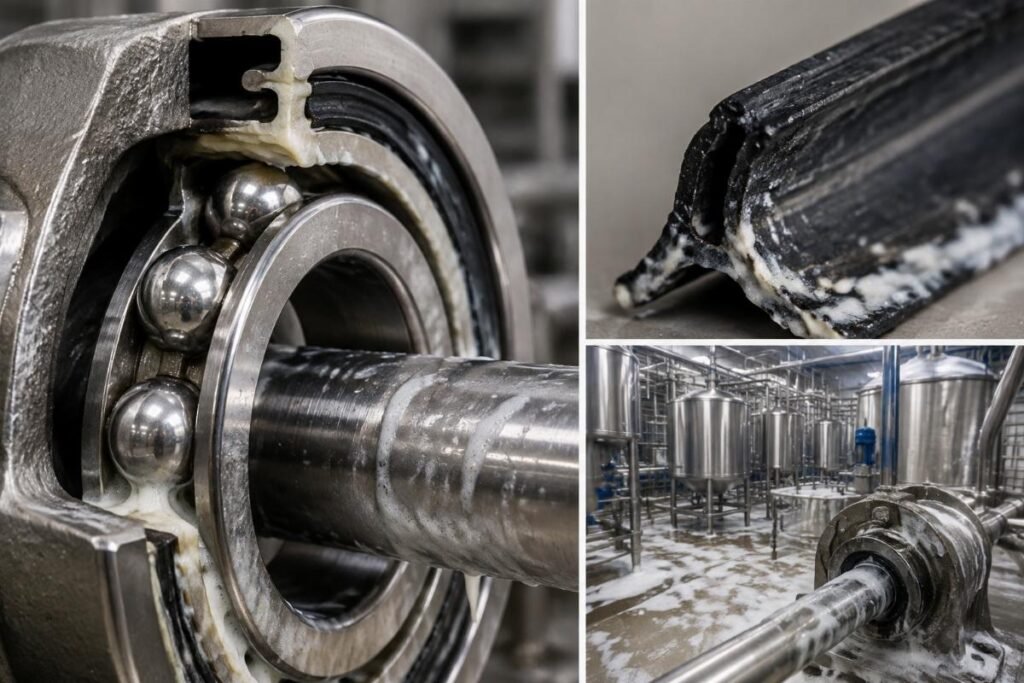
I still remember a call from a dairy plant maintenance manager in the Netherlands. Their SKF deep groove ball bearings on a filling machine spindle had seized within months of installation. When we pulled the units apart, the raceways were coated in a thick, chalky residue—classic soap formation from grease reacting with alkaline CIP fluids. The customer assumed the batch was defective. In reality, the seal lips had softened and allowed caustic wash water to penetrate the bearing cavity. This is a textbook SKF bearing contamination control failure, and I have seen variations of it across dairies, breweries, and bakeries across Europe [NEED_CITE: root cause distribution of bearing failures in food processing per ISO 15243].

Let us walk through the three dimensions that determine whether your SKF bearing contamination control strategy will hold up in real food plant conditions.
Why Do SKF Bearings Fail Prematurely in EU Food Plants?
The dominant failure mode in food processing bearings is contamination-induced surface distress, not classical rolling contact fatigue.
In heavy industry, bearing failure is often a fatigue story—measured in L10 life, governed by load and speed. In food plants, the story is entirely different. Bearings are subjected to aggressive washdowns, flour dust, sugar crystals, and acidic or alkaline residues. These contaminants enter the bearing cavity through compromised seals, degrade the lubricant, and initiate micro-pitting, corrosion, and eventual seizure [NEED_CITE: contamination exclusion coefficient application in modified bearing life calculation per ISO 281].
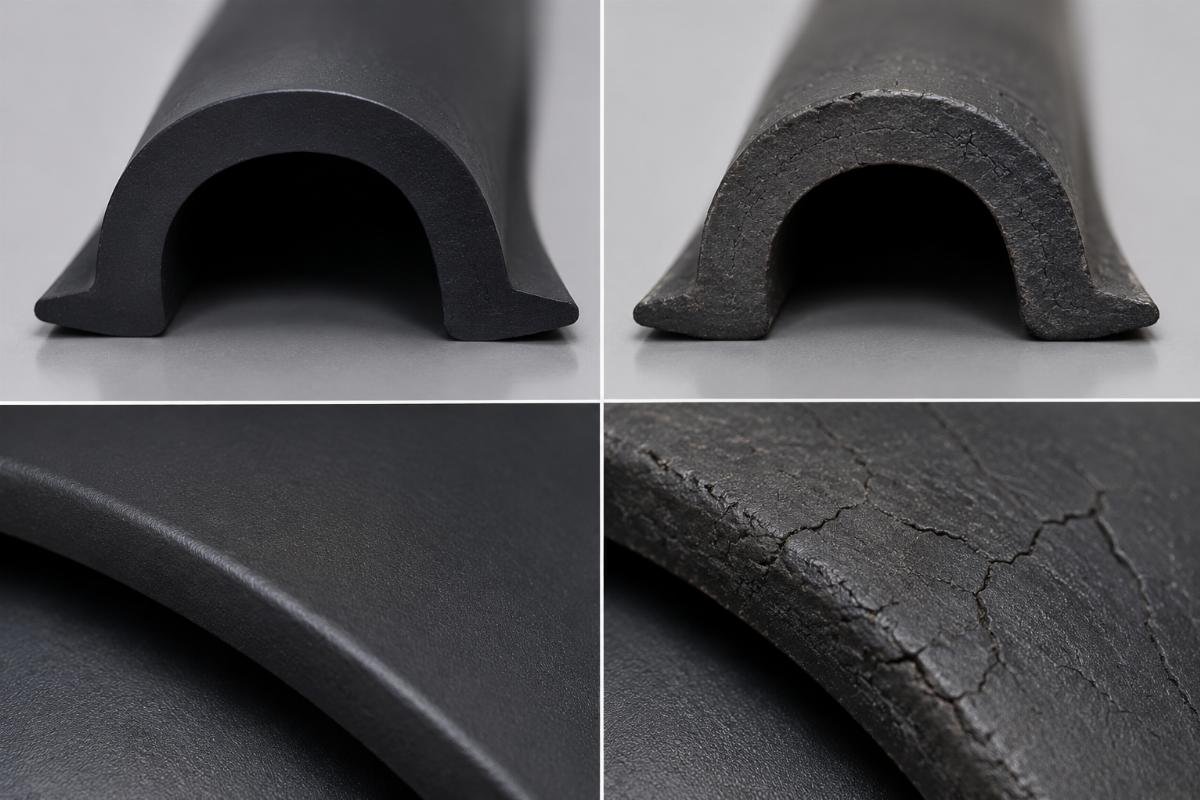
A beverage bottling line I inspected in Southern Germany had bearing replacements scheduled every few months on its conveyor drives. The maintenance team kept ordering the same SKF part numbers, assuming the bearings were simply under-rated for the load. When we examined the failed units, the seal lips were visibly hardened and cracked from repeated exposure to high-temperature caustic sprays. The lubricant inside had emulsified and drained away. The bearing was not undersized—it was unprotected.
This pattern repeats across the industry. The EHEDG guidelines on hygienic equipment design explicitly call out seal integrity and lubricant compatibility as critical factors for bearing reliability in food environments [NEED_CITE: EHEDG guideline on hygienic design of bearing arrangements in food equipment]. Yet many procurement specifications focus solely on bearing dimensions and load ratings, leaving seal material and grease chemistry as afterthoughts.
How to Select the Right SKF Seals for CIP Environments?
Standard NBR seals are inadequate for CIP exposure—FKM-based seals must be specified for any bearing arrangement subject to caustic or acidic washdown.
The seal is the first and most critical line of defense in SKF bearing contamination control. In food plants, bearings are routinely exposed to cleaning-in-place cycles using sodium hydroxide solutions at elevated temperatures, followed by acid rinses and hot water flushes. Standard nitrile rubber (NBR) seals, while cost-effective and widely stocked, begin to degrade under these conditions. The seal lip swells, loses elasticity, and eventually allows fluid ingress.
Fluoroelastomer (FKM) seals, by contrast, offer substantially higher resistance to both alkaline and acidic media, as well as to elevated temperatures encountered during hot washdowns. When specifying SKF bearing contamination control solutions for CIP zones, the seal material upgrade from NBR to FKM is non-negotiable [NEED_CITE: chemical resistance comparison of NBR versus FKM elastomers in food processing environments].
I worked with a bakery operation in Belgium where flour dust was the primary contaminant. The maintenance team had been using standard contact seals, but the fine particulate still found its way past the seal lip during mixer operation. The result was accelerated raceway wear and noise levels that exceeded acceptable thresholds. Switching to a multi-lip FKM seal arrangement with a dedicated dust exclusion geometry solved the problem. The bearing noise levels dropped noticeably, and replacement intervals extended substantially.
When sourcing SKF seals for food plant applications, authenticity verification becomes critical. Counterfeit seals may use inferior elastomer compounds that fail almost immediately under CIP conditions. Working with a verified supplier who can provide origin documentation and batch traceability is essential for SKF bearing contamination control integrity [NEED_CITE: SKF authenticity verification protocols for seal and bearing products].
| Seal Material | Alkali Resistance | Acid Resistance | Temperature Range | Suitability for CIP |
|---|---|---|---|---|
| NBR (Standard) | Vulnerable | Vulnerable | Moderate | Not Recommended |
| FKM (Fluoroelastomer) | Robust | Robust | Extended | Recommended |
| EPDM | Resistant | Vulnerable | Moderate | Conditional |
What Are the Risks of Lubricant Incompatibility?
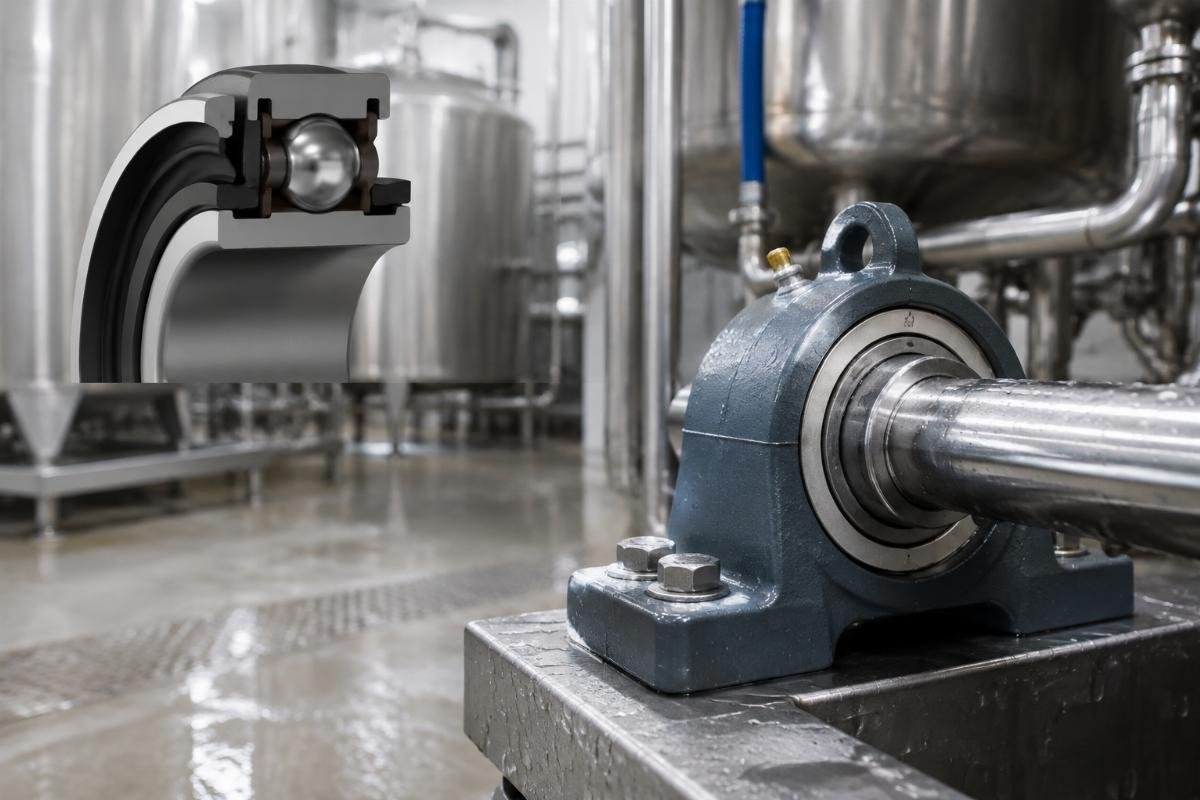
Even the best seal cannot protect a bearing if the grease inside reacts chemically with the cleaning agents that bypass it—lubricant compatibility is the second pillar of SKF bearing contamination control.
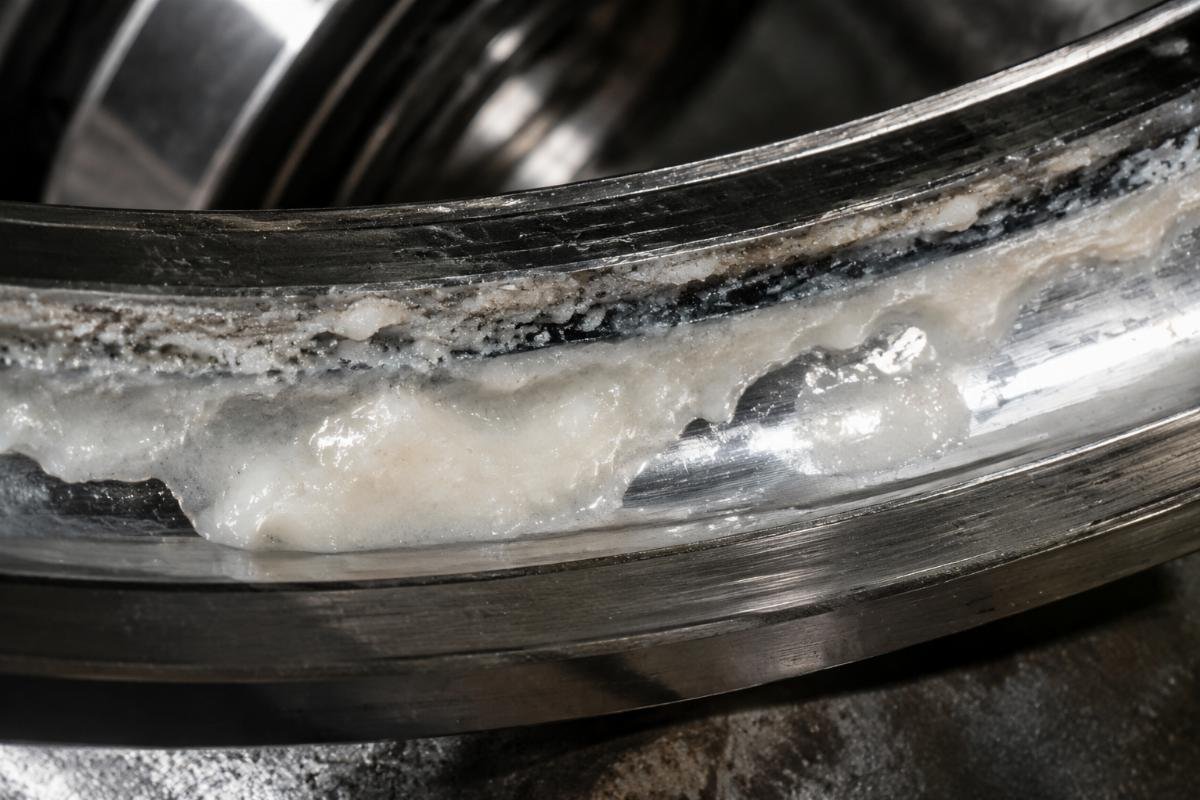
In food processing environments, lubricants must meet food-grade registration requirements (such as NSF H1 classification) while also resisting chemical attack from CIP fluids. When caustic cleaning solutions penetrate the bearing cavity—whether through seal degradation or during relubrication—they can react with the grease thickener, causing saponification. The grease turns into a hard, soap-like mass that loses all lubricating properties. The bearing then runs essentially dry, leading to rapid surface distress and failure.
This is not a rare occurrence. In the dairy case I mentioned earlier, the皂化 residue we found in the raceways was the direct result of the grease thickener reacting with sodium hydroxide from the CIP cycle. The grease had not simply been washed out—it had been chemically transformed into a non-functional solid [NEED_CITE: grease thickener saponification mechanism under alkaline exposure in food processing bearings].
The solution requires selecting a food-grade grease that is not only NSF H1 registered but also chemically compatible with the specific CIP chemistry used in the plant. Some synthetic greases based on polyurea or perfluoropolyether thickeners offer markedly better resistance to alkaline and acidic attack compared to conventional lithium-complex greases. However, compatibility must be verified against the actual cleaning agents in use, as formulations vary significantly between plants [NEED_CITE: lubricant compatibility testing methodology for food-grade greases under CIP chemical exposure].
Over-greasing is another common mistake. Some maintenance teams assume that packing the bearing cavity full of grease will provide extra protection against contaminant ingress. In reality, excess grease generates churning heat, accelerates grease degradation, and can actually force seal lips outward, creating gaps for contaminants to enter. The correct grease fill volume—typically a defined percentage of the free cavity space—must be followed precisely.
How to Ensure Clean Installation Practices?
A bearing installed in a contaminated environment is compromised before it even starts running—installation hygiene is the third pillar of SKF bearing contamination control.
Even with the correct seal material and compatible grease, a bearing can fail prematurely if it is installed in a dirty environment or handled improperly. Flour dust, metal shavings from nearby machining, and even ambient humidity can introduce contaminants into the bearing cavity during the installation process. These initial contaminants become embedded in the raceway surfaces and initiate damage from the very first revolution.
In a confectionery plant in France, the maintenance team was replacing bearings in a sugar coating machine. The installation area was adjacent to an open sugar processing line, and ambient sugar dust was pervasive. Despite using new SKF bearings with FKM seals, the replacement units failed within a similar timeframe as the originals. Investigation revealed that sugar crystals had entered the bearing cavity during installation, before the seal was fully seated. These hard particles acted as abrasive agents, accelerating wear from day one.
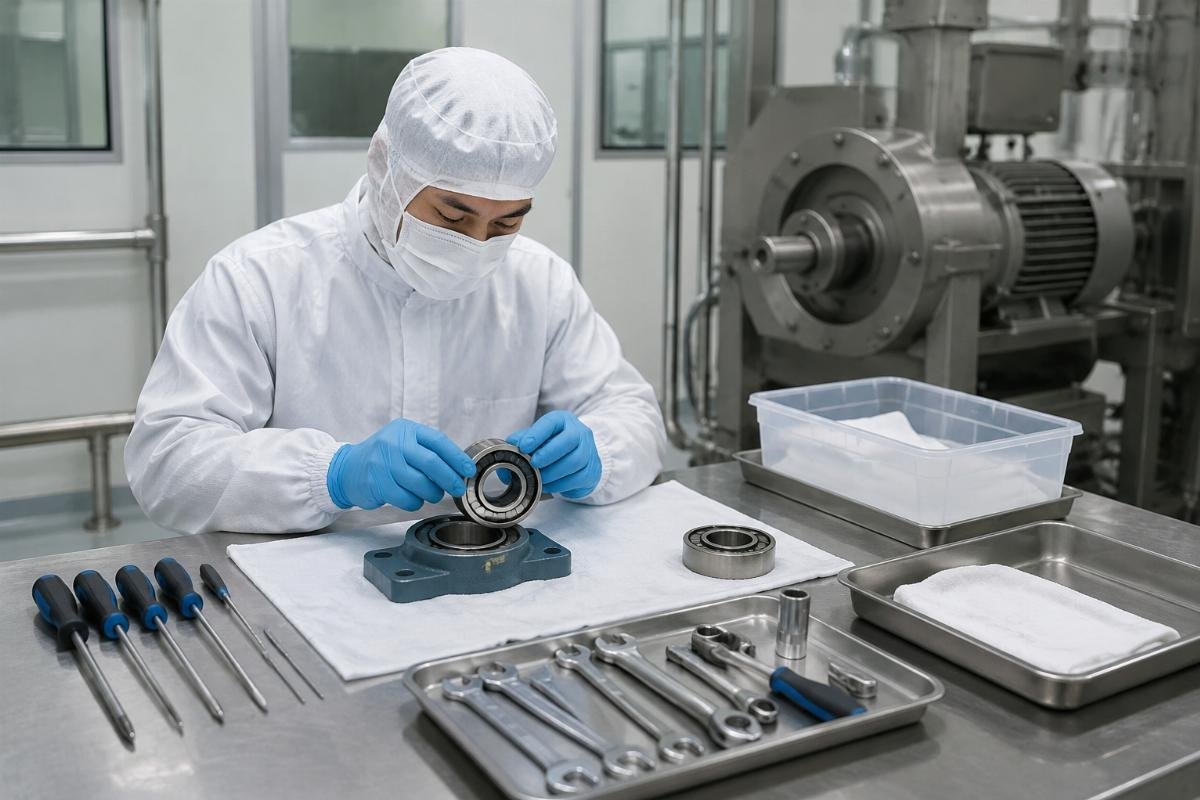
Proper SKF bearing contamination control during installation requires several disciplined practices:
- Dedicated clean installation zone: Bearing installation should be performed in a designated area, physically separated from dust-generating processes. Portable clean tents or enclosures can be used in plants where permanent clean rooms are not feasible.
- Surface preparation: The shaft, housing bore, and all mating surfaces must be thoroughly cleaned and dried before assembly. Any residual cleaning fluid or particulate on these surfaces will be pushed into the bearing during mounting.
- Proper mounting tools: Hydraulic nuts, induction heaters, or mechanical mounting tools designed for the specific bearing size should be used. Direct hammering on the bearing rings or seals causes micro-damage to sealing surfaces and can introduce metal debris into the cavity [NEED_CITE: SKF mounting and dismounting guidelines for rolling bearings].
- Immediate sealing: Once the bearing is mounted and greased, the seal should be inspected for proper seating, and any exposed cavity openings should be sealed immediately to prevent ambient contamination ingress before the equipment is started.
For maintenance teams sourcing replacement bearings, working with a supplier who provides technical guidance on application-specific installation practices adds significant value. Authenticity verification of the bearings and seals at the point of receipt is equally important—counterfeit products may have dimensional deviations or inferior seal materials that undermine even the most careful installation process [NEED_CITE: cross-reference and interchange guidance for SKF bearing replacement sourcing].
Conclusion
SKF bearing contamination control in EU food plants is a system challenge, not a component challenge.
Premature bearing failure in food processing environments is driven by contamination ingress through inadequate seals, lubricant incompatibility with CIP chemicals, and poor installation hygiene. Addressing all three dimensions—seal material upgrade to FKM, verified grease compatibility with plant-specific cleaning agents, and disciplined clean installation practices—is essential for achieving reliable bearing service life. Sourcing genuine SKF bearings and seals from verified suppliers with technical support capability ensures that the contamination control strategy is built on a foundation of product integrity.



Leave a Reply