


SKF SYSTEM 24 Lubricator Rollout on EU Sites Wholesale Supplier for Industrial Buyers
Bigger is not better when it comes to single point lubricators—matching discharge rate to actual operating conditions is what determines bearing survival.
Choosing the right SKF SYSTEM 24 lubricator requires working backward from environment (explosive zones, temperature extremes), drive type (electromechanical, gas-driven, or connected), and grease compatibility—not from reservoir capacity alone. Selecting by capacity first leads to seal rupture, premature bearing failure, and unplanned downtime.
I remember walking through a cement plant in Lagos years ago, where maintenance crews were manually greasing conveyor rollers with a hand gun. They over-pressurized the bearing cavity, blew out the seal, and watched fresh grease pour onto the hot floor. Within weeks, those bearings seized. The root cause was never the bearing itself—it was the lubrication method. [NEED_CITE: root cause distribution of bearing failures per ISO 15243] That scene replays across industrial sites worldwide: buyers default to the largest canister available, or assume one grease fits all, or skip drive-type matching entirely. The SKF SYSTEM 24 family exists precisely because each application demands a different mechanical response.
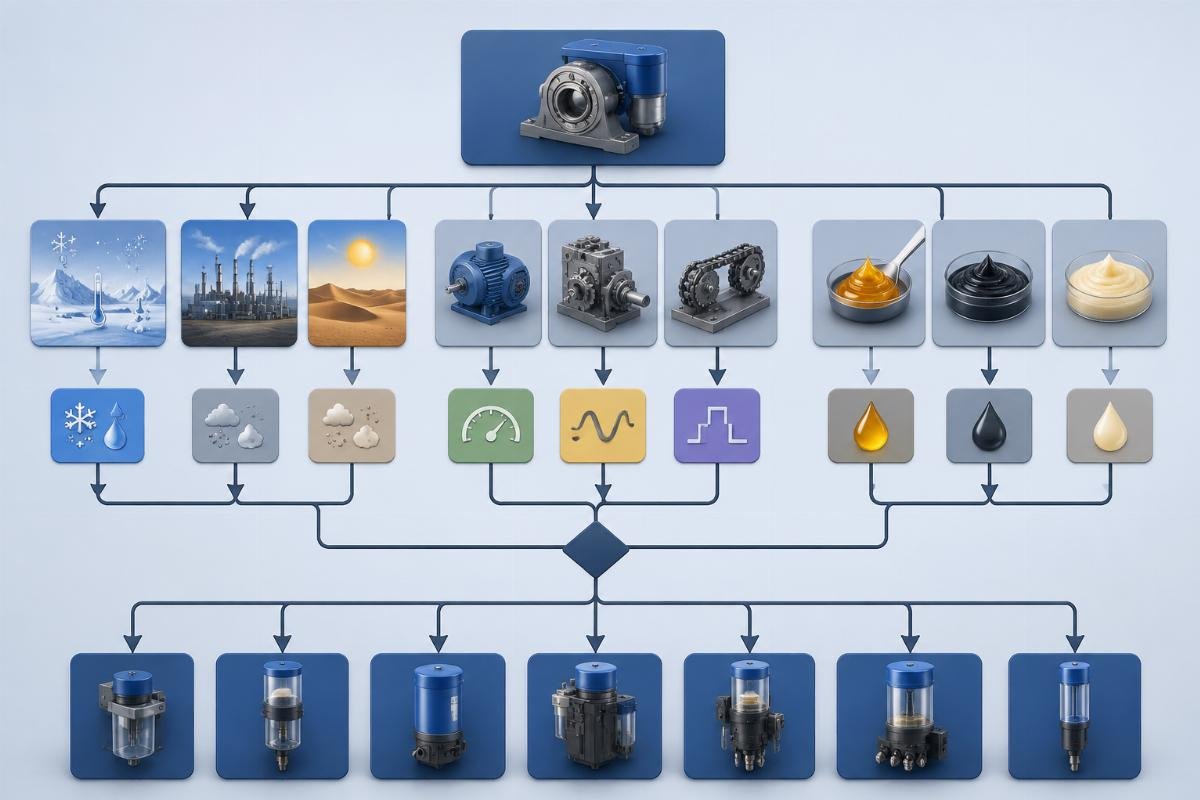
Let me walk you through how experienced maintenance teams actually approach SKF SYSTEM 24 lubricator selection on the ground—starting with the model family, then the reverse-engineering logic, grease pitfalls, connected monitoring ROI, and finally how to verify authenticity before installation.
What Models Exist in the SKF SYSTEM 24 Family and What Problem Does Each Solve?
The SKF SYSTEM 24 lineup splits into three drive architectures: TLSD (electromechanical, general-purpose), LAGD (gas-driven, intrinsically safe for explosive atmospheres), and TLDD (connected, web-monitored for remote or critical assets). Environment dictates drive type—not the other way around.
| Parameter | TLSD Series | LAGD Series | TLDD Series |
|---|---|---|---|
| Drive mechanism | Electromechanical motor | Gas-generated pressure | Electromechanical with wireless module |
| ATEX certification | Not rated for Zone 0 | Certified for Zone 0 | Not rated for Zone 0 |
| Reservoir options | 125 ml / 250 ml | 60 ml / 125 ml | 125 ml / 250 ml |
| Remote monitoring | None | None | Web dashboard, leak alerts |
| Typical mounting | Standard bearing housing | Confined or hazardous areas | Hard-to-reach or elevated points |
| Grease range compatibility | Wide (NLGI 0–2) | Wide (NLGI 0–2) | Wide (NLGI 0–2) |
[NEED_CITE: ATEX equipment category definitions under Directive 2014/34/EU]
A food processing line in Southern Europe needed lubrication inside a flour milling zone classified as ATEX Zone 0. The maintenance manager initially requested TLSD units because they were cheaper and in stock. But the gas-driven LAGD was the only option legally installable in that zone. Switching to LAGD with a food-grade grease prefill eliminated the compliance risk entirely. The TLSD would have been a regulatory violation from day one.
Conversely, a cement kiln operator in West Africa ran TLSD units on high-temperature conveyor bearings. The electromechanical drive handled the thermal cycling without pressure drift, whereas a gas-driven unit would have discharged unpredictably as ambient temperature fluctuated. [NEED_CITE: SKF DialSet calculation methodology for discharge rate adjustment]
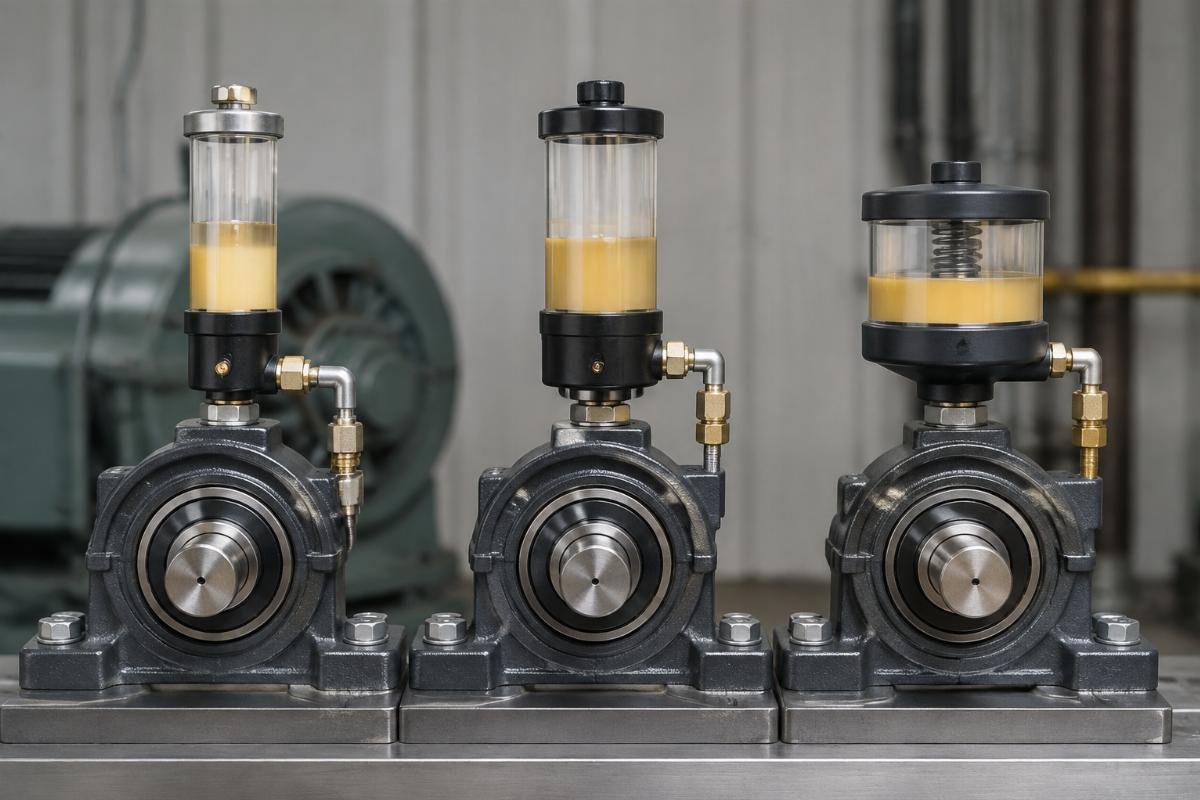
The takeaway: map your installation environment first—temperature range, explosive atmosphere classification, physical accessibility—then let those constraints narrow the model family. Capacity is a secondary decision.
How Do You Reverse-Engineer the Right Model from Operating Conditions?
Temperature extremes, explosive zone classification, and installation geometry are the three non-negotiable filters. Apply them in that order, and the correct SKF SYSTEM 24 lubricator selection becomes obvious.
Step one: classify the atmosphere. If the bearing sits inside a grain silo, solvent handling area, or any zone where combustible dust or vapor is present, you need intrinsic safety certification. The LAGD series carries ATEX approval for Zone 0 installation. [NEED_CITE: IECEx and ATEX zone classification for combustible dust atmospheres] The TLSD and TLDD do not. Installing a non-certified unit in a classified zone is not a maintenance mistake—it is a safety incident waiting to happen.
Step two: assess thermal stability requirements. Gas-driven lubricators rely on internal chemical reactions to generate discharge pressure. In environments where ambient temperature swings widely—outdoor conveyors, kiln feeders, open-pit mining equipment—the gas reaction rate becomes inconsistent. Electromechanical TLSD units maintain a steady motor-driven discharge regardless of external temperature. For high-temperature or thermally variable sites, TLSD is the reliable choice.
Step three: evaluate physical access and inspection frequency. If the lubrication point sits atop a silo, inside a ductwork chase, or on a rotating carousel where manual inspection is impractical, the TLDD connected lubricator pays for itself. The wireless module pushes status data to a web dashboard, and leak or empty-canister alerts arrive in real time rather than during the next scheduled walk-around. [NEED_CITE: maintenance cost reduction from remote condition monitoring per industry benchmark studies]
A Middle East steel mill once installed TLSD units on every accessible bearing in their rolling line—over a hundred points. Six months later, they discovered that bearings on the overhead crane runway, which required scaffolding to reach, had been running dry because no one checked them. Retrofitting those specific points with TLDD units cut the inspection cycle dramatically and flagged two early-stage seal leaks before they caused shaft damage.
The logic is simple: hazardous atmosphere forces LAGD, thermal instability forces TLSD, and inaccessibility forces TLDD. When multiple factors overlap, safety classification always wins.
How Do You Avoid Grease Compatibility Pitfalls with Pre-Filled Canisters?
Pre-filled SKF SYSTEM 24 lubricators ship with specific grease types—using the wrong prefill for your operating temperature, speed, or load condition will accelerate degradation regardless of how well the lubricator itself performs.
The SKF catalog offers prefill options including multi-purpose lithium complex greases, high-temperature polyurea greases, food-grade aluminum complex greases, and low-temperature synthetics. Each has a defined NLGI consistency grade and a compatible temperature envelope. [NEED_CITE: grease compatibility testing methodology per DIN 51825]
Here is where buyers commonly stumble. A dairy plant in Northern Europe ordered LAGD units pre-filled with a standard lithium complex grease because it was the default catalog option. But the fillers operated in a washdown environment where the bearings were regularly exposed to hot water and caustic cleaning agents. The lithium complex grease emulsified and washed out within days. Switching to a food-grade aluminum complex prefill—specifically formulated for water resistance and NSF H1 registration—solved the problem.
The SKF DialSet software calculates the correct discharge rate based on bearing type, speed, load, and operating temperature. [NEED_CITE: SKF bearing lubrication interval calculation principles] But DialSet cannot compensate for a fundamentally incompatible grease. If the grease base oil viscosity is too low for the operating temperature, it will thin out and leak. If the thickener chemistry conflicts with residual grease already in the bearing cavity, the mixture can soften, harden, or separate—any of which destroys lubrication.
Before deploying any pre-filled SKF SYSTEM 24 lubricator, run a compatibility check: identify the existing grease in the bearing (thickener type, base oil viscosity, NLGI grade), compare it against the prefill specification, and confirm they are compatible or plan a full purge before installation. Mixing incompatible greases is one of the most common—and most preventable—causes of premature bearing failure in industrial plants. [NEED_CITE: failure modes from grease incompatibility in rolling element bearings]

A pulp and paper mill in Scandinavia learned this the hard way. They switched grease suppliers without purging the bearing cavities. The new polyurea grease reacted with residual lithium complex grease, forming a hard, abrasive compound that scored the roller surfaces. Bearing replacement costs ran into five figures before the root cause was identified. A simple compatibility matrix review would have prevented the entire episode.
Is the Connected TLDD Series Worth the Investment and How Do You Calculate ROI?
For critical, remote, or high-consequence lubrication points, the TLDD connected lubricator typically justifies its premium within a moderate payback window—provided you calculate ROI against avoided downtime, not just hardware cost.
The TLDD series adds a wireless communication module to the proven electromechanical TLSD platform. It reports discharge status, remaining grease volume, and battery level to a web-based dashboard. Alerts trigger when discharge anomalies occur—such as a blocked nozzle, an empty canister, or an unexpected pressure drop. [NEED_CITE: industrial IoT condition monitoring ROI frameworks for lubrication systems]
Consider the cost structure. A single unplanned bearing failure on a critical conveyor in a mining operation can halt production for an extended period. The lost throughput, emergency repair labor, and expedited spare parts shipping easily dwarf the price difference between a standard TLSD and a connected TLDD. If you have even a handful of lubrication points where failure consequences are severe, the TLDD investment is straightforward.
A European wind farm operator faced exactly this calculation. Their gearboxes sit atop towers requiring specialized access equipment for inspection. Manual greasing checks meant climbing each tower on a fixed schedule—expensive in labor and turbine downtime. Deploying TLDD units on the main shaft and pitch bearings allowed remote monitoring from the control center. Maintenance crews only climbed when the dashboard flagged an actual issue. Inspection trips dropped noticeably, and two early-stage lubricant starvation alerts prevented gearbox damage that would have required crane mobilization.

The ROI formula is not about comparing unit prices. It is about comparing the cost of routine manual inspection against the cost of missed failures. For easily accessible, non-critical points, the standard TLSD remains the economical choice. For points where access is difficult, consequences of failure are high, or inspection intervals are long, the TLDD connected monitoring closes the visibility gap. [NEED_CITE: maintenance strategy optimization frameworks for critical vs. non-critical assets]
How Do You Verify Authenticity and Trace Origin Before Installation?
Counterfeit lubricators and refilled canisters pose a real risk in the global MRO supply chain. Verifying authenticity through authorized channels, QR code validation, and country-of-origin documentation is a non-negotiable step before any SKF SYSTEM 24 lubricator reaches the bearing housing.
The SKF SYSTEM 24 lubricator is a precision device with internal seals, a calibrated discharge mechanism, and—in the case of TLDD—a certified wireless module. Counterfeit or tampered units may look identical externally but fail to deliver consistent discharge rates, leak prematurely, or lack the ATEX certification markings required for hazardous area installation. [NEED_CITE: anti-counterfeiting measures in industrial lubrication product supply chains]
When sourcing SKF SYSTEM 24 lubricators for multi-site rollouts, I always advise buyers to confirm three things before accepting delivery. First, verify that the supplier is an authorized SKF distributor or can provide documented proof of their sourcing chain back to an SKF regional entity. Second, scan the QR code on each unit—genuine SKF products carry traceable codes that link to manufacturing batch data. Third, request country-of-origin documentation that matches the product labeling. Discrepancies between labeled origin and shipping documents are a common red flag.
A distributor in Central Asia received a bulk shipment of what appeared to be genuine LAGD units. The packaging looked correct, the markings matched, and the price was attractive. But when they scanned the QR codes, several units returned invalid or duplicated batch numbers. Investigation revealed the shipment contained refilled canisters with non-SKF grease and aftermarket gas cartridges. The entire batch was rejected, but the delay disrupted a scheduled maintenance shutdown for a regional mining client.

We support buyers across multiple regions with authorized-channel verification, cross-reference guidance between SKF SYSTEM 24 variants and legacy single-point lubricators, and country-of-origin traceability checks. When you are deploying lubricators across several sites or reselling to end users, having a sourcing partner who can validate authenticity before shipment eliminates the risk of installing compromised units. [NEED_CITE: authorized distributor verification processes for major bearing and lubrication brands]
Conclusion
SKF SYSTEM 24 lubricator selection succeeds when you start from the operating environment and work backward to the model—not the other way around. Atmosphere classification determines whether you need gas-driven ATEX certification, thermal conditions determine whether electromechanical stability is required, and physical access determines whether connected monitoring justifies the investment. Grease compatibility must be verified independently of the lubricator model, and authenticity verification through authorized channels protects every downstream decision. Get these foundations right, and the lubricator becomes a reliability asset rather than a maintenance liability.




Leave a Reply