


SKF Bearing REACH and RoHS Compliance Wholesale Supplier for EU Buyers
Most buyers assume a single "REACH compliant" stamp on the outer carton covers the entire bearing assembly. It does not.
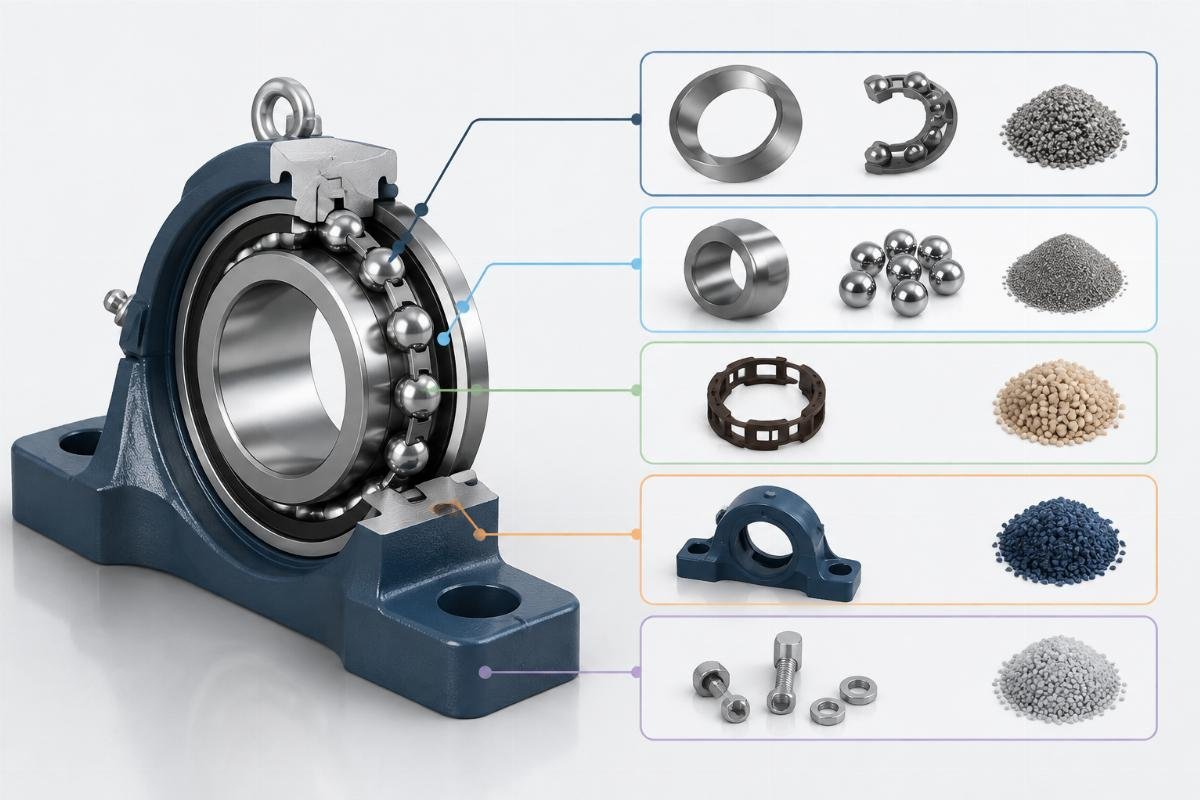
EU customs and end-user compliance teams require component-level REACH SVHC declarations and third-party RoHS test reports covering the bearing rings, rolling elements, cage, seals, and lubricant individually. A generic supplier self-certification will not pass inspection at Hamburg, Rotterdam, or Antwerp.
I still remember the morning I got the call from a freight forwarder in Hamburg. A full container of deep groove ball bearings had been held at the port for over a week. The buyer’s quality team rejected the shipment because the only document we provided was a one-page letter stating "products comply with environmental regulations." No SGS report number, no SVHC substance list breakdown, no separate declarations for the grease or the nylon cage. The container sat there accumulating demurrage charges while we scrambled to get the right paperwork from the manufacturer [NEED_CITE: EU customs detention causes for missing REACH documentation]. That shipment eventually cleared, but the cost in storage fees, re-inspection charges, and lost credibility was severe. Since then, I have restructured how I handle compliance documentation for every order going into the European market.

Let me walk you through exactly what EU buyers need, why component-level files matter, and how to organize everything before the goods leave the warehouse.
What REACH & RoHS Documents Do EU Buyers Actually Require for SKF Bearings?
Buyers need verifiable, third-party test reports with traceable reference numbers, not supplier self-declarations.
The REACH Regulation (EC 1907/2006) requires suppliers to communicate the presence of any Substance of Very High Concern above the threshold of 0.1% by weight. The RoHS Directive (2011/65/EU) restricts six categories of hazardous substances in electrical and electronic equipment, but its scope extends to bearing components used in motors, gearboxes, and industrial machinery that fall under the directive’s coverage [NEED_CITE: scope of RoHS Directive 2011/65/EU for mechanical components in industrial equipment].
Here is what a European distributor or OEM procurement team will ask for:
- A REACH SVHC declaration listing all substances on the ECHA Candidate List present above 0.1% w/w, broken down by component
- A RoHS test report from an accredited laboratory such as SGS, TÜV, or Intertek, with a verifiable report number and test date
- Material safety data sheets for the lubricant used in the bearing
- A declaration of conformity for the cage material, especially if it contains glass-filled nylon or bronze alloys
A common mistake is assuming that because SKF is a global brand, all compliance files are automatically bundled with the shipment. In reality, SKF provides REACH SVHC declarations on their official website for their own manufactured products, but when you are sourcing through a wholesale channel, you must confirm that the specific batch carries the correct documentation matching the product codes on your commercial invoice [NEED_CITE: SKF official REACH SVHC candidate list declaration availability].
A mid-sized distributor in Spain once told me they received a batch of bearings where the outer packaging carried a RoHS label, but the grease inside contained a level of a restricted phthalate that exceeded the threshold. The bearing itself was fine. The grease was not. The entire batch had to be quarantined, and the buyer demanded a full re-greasing operation with certified compliant lubricant.
Which Bearing Components Fall Under REACH SVHC and RoHS Scope?
Every non-metallic and lubricated component inside the bearing envelope requires its own compliance file.
Many buyers focus only on the steel rings and rolling elements, assuming that because bearing steel is an alloy of iron, chromium, and carbon, it is inherently compliant. That assumption is partially correct for the steel itself, but it ignores the components that actually trigger regulatory scrutiny.
| Component | REACH SVHC Risk Level | RoHS Restriction Risk | Typical Documentation Required |
|---|---|---|---|
| Bearing rings and rolling elements | Low | Low | Mill certificate + SVHC declaration |
| Steel cage | Low | Moderate (lead in free-machining steel) | SVHC declaration + RoHS test report |
| Brass or bronze cage | Moderate (lead content) | Moderate | SVHC declaration + RoHS test report with lead threshold check |
| Polyamide or PTFE seal | Moderate to High | Moderate | SVHC declaration + RoHS test report |
| Nitrile rubber seal | Moderate (phthalates, aromatic amines) | Moderate | SVHC declaration + RoHS test report |
| Lubricant (grease or oil) | High (PAHs, phthalates, heavy metals) | Moderate | MSDS + SVHC declaration + RoHS test report |
The ECHA Candidate List continues to grow and currently includes well over two hundred substances [NEED_CITE: current count of substances on ECHA REACH SVHC Candidate List]. Each update adds new chemicals that may be present in seal elastomers, grease thickeners, or anti-wear additives. A declaration that was valid two years ago may not cover the current list.
I once worked with a buyer in the Middle East who was importing a large volume of sealed deep groove ball bearings for use in electric motors. The buyer’s end customer required a separate REACH declaration for the nitrile rubber seals. We had to request the seal supplier’s test report, which showed that a specific aromatic amine was present just below the threshold. The buyer accepted it, but they asked us to provide a written confirmation that the substance was below 0.1% w/w, along with the CAS number and the test method used. That level of detail is what separates a compliant shipment from a rejected one.
How to Verify the Authenticity and Validity of Compliance Test Reports?
Check the report number, test date, testing standard version, and the accredited status of the laboratory.
A test report is only as good as its verifiability. I have seen reports that looked perfectly professional but were actually issued for a different product family, or were based on a superseded testing standard, or came from a laboratory that had lost its ISO 17025 accreditation.
Here is the verification process I follow for every SKF bearing REACH RoHS compliance shipment entering the EU:
- Confirm the report number is traceable. Contact the issuing laboratory directly through their official website to verify the report exists and matches the product description.
- Check the test date. REACH SVHC declarations should reference the most recent Candidate List. If the report is older than the latest ECHA update, request a new declaration.
- Verify the testing standard. RoHS testing should be performed according to IEC 62321 series standards. If the report references an outdated version, the buyer’s compliance team may reject it.
- Confirm laboratory accreditation. The lab must hold ISO 17025 accreditation for the specific test methods listed in the report [NEED_CITE: ISO 17025 accreditation requirement for RoHS testing laboratories].
- Cross-check product codes. The report must explicitly reference the bearing model numbers or at least the product family that matches your commercial invoice.
A buyer in Northern Europe once showed me a RoHS report from a supplier that listed the product as "ball bearing" with no model numbers, no batch codes, and no reference to the specific grease or seal materials. The buyer’s compliance officer flagged it immediately. The report was technically valid for some bearing, but it could not be linked to the shipment in question. We had to arrange new testing for the specific components in that batch, which delayed the shipment by several weeks.
When I source SKF bearings through authorized channels, I make sure the compliance documentation package includes the original test reports with full traceability to the product codes on the order. This is not optional. It is the difference between a smooth customs clearance and a port detention.

What Happens When Compliance Documentation Is Missing or Incomplete?
The cost of non-compliance far exceeds the cost of proper documentation preparation.
When a shipment arrives at an EU port without the required REACH or RoHS documentation, the consequences cascade quickly. Customs authorities may hold the cargo for inspection. The buyer’s receiving team may refuse to accept delivery. The goods may need to be re-exported, destroyed, or held in a bonded warehouse while the missing documents are obtained.
The financial impact includes:
- Port storage and demurrage charges, which accumulate daily
- Re-inspection fees if customs or the buyer’s quality team opens the packages
- Re-testing costs if new samples need to be sent to an accredited laboratory
- Potential penalties if the goods are found to contain restricted substances above legal thresholds
- Loss of buyer confidence and potential contract termination
I have seen cases where the total cost of a compliance failure reached several times the value of the original order. In one case, a buyer in Western Europe received a shipment of tapered roller bearings without proper REACH documentation for the lubricant. The buyer’s end customer, an automotive tier-one supplier, rejected the entire batch. The bearings had to be drained, re-greased with a compliant lubricant, re-tested, and re-shipped. The total cost was a mid-six-figure sum, and the buyer switched to a different supplier for the next contract.
The lesson is clear: compliance documentation is not an afterthought. It is a core part of the product specification.

How to Request and Organize REACH/RoHS Files Before Placing Orders?
Build the compliance documentation requirements into your purchase order before production begins.
The most effective way to avoid compliance failures is to treat REACH and RoHS documentation as a contractual requirement, not a post-shipment request. When you place an order for SKF bearings destined for the EU market, your purchase order should explicitly list the following:
- REACH SVHC declaration for each component (bearing, cage, seal, lubricant)
- RoHS test report from an ISO 17025 accredited laboratory, with verifiable report number
- Material safety data sheet for the lubricant
- Confirmation that all documents reference the specific product codes on the order
- Confirmation that the documents are based on the most current ECHA Candidate List
I recommend sending a compliance documentation checklist to your supplier at the time of order placement, not after the goods are ready to ship. This gives the supplier time to gather the correct files and request updated test reports if needed.
When working with a SKF bearing REACH RoHS compliance wholesale supplier, I always confirm the documentation package before the order is confirmed. I ask for sample copies of the declarations and test reports for the specific product family. I verify the report numbers with the issuing laboratory. I check that the seal material and grease type match what is listed in the reports. Only then do I authorize the shipment.
This process adds a few days to the order cycle, but it prevents the kind of delays and costs that come from a compliance failure at the port.

Conclusion
EU compliance is not a stamp. It is a traceable, component-level documentation package. Every bearing, every seal, every drop of grease must carry verifiable REACH SVHC declarations and third-party RoHS test reports. Build these requirements into your purchase order, verify the report numbers before shipment, and treat compliance as a core product specification. The cost of doing it right is always less than the cost of getting it wrong.




Leave a Reply