

SKF Bearing Material Grades EU Standards Wholesale Supplier
Matching a bearing steel grade number does not guarantee EU compliance.
SKF bearing material grades such as 100Cr6, carbon steel, and stainless variants must be verified against EN standards through official traceability documents, not just牌号 cross-reference tables. EU regulations including REACH require third-party material certification for customs clearance, making supplier documentation as critical as the product itself.
I still remember a Hanover Industrial Fair where a German buyer pulled out an EN 10025 specification sheet alongside SKF’s internal 100Cr6 grade documentation. I quoted him material hardness, clearance, and load ratings the way I always had. Then he asked one question: "Where is your REACH traceability certificate?" I froze. That entire container sat in Rotterdam port waiting for third-party testing reports, delaying delivery by weeks. Since then, I learned that when European buyers ask about SKF bearing material grades EU standards, they are not just checking steel composition—they are auditing your entire documentation chain. [NEED_CITE: EU customs requirements for bearing steel imports under REACH regulation]

The difference between a smooth customs clearance and a port detention often comes down to whether you understand the gap between牌号 matching and regulatory compliance.
What Are SKF Bearing Material Grades and How Do They Map to EU Standards?
SKF uses proprietary material designations that require cross-reference to EN/ISO standards for EU market acceptance.
The core SKF bearing material grades include 100Cr6 for standard applications, carbon steel variants for general-purpose use, and stainless steel options like AISI 440C for corrosive environments. However, these designations originate from different standardization systems—ISO, DIN, EN, and ASTM—each with distinct trace element limits. [NEED_CITE: ISO 683-17 bearing steel chemical composition requirements]
Most buyers assume that if the grade number matches, the material is identical. The reality is that different standard systems specify varying limits for elements like sulfur, phosphorus, and oxygen content. A 100Cr6 produced to DIN standards may have different inclusion density requirements than one produced to EN standards, even though the nominal composition appears identical.
The mapping process requires consulting official cross-reference tables:
- SKF 100Cr6 corresponds to EN 10277-3 bright steel specifications
- Carbon steel grades align with EN 10025 structural steel standards
- Stainless variants follow EN 10088 corrosion-resistant steel requirements
A Middle East distributor once ordered a full container of SKF bearings based solely on牌号 matching. The shipment arrived without material traceability certificates, and customs held the goods for extended testing. The lesson:牌号 cross-reference is just the starting point, not the finish line.
Which EU Regulations Apply to SKF Bearing Materials (REACH/EN 10025)?
EU regulations require third-party REACH compliance documentation and material traceability certificates, not manufacturer self-declarations.
The European Union’s REACH regulation (Registration, Evaluation, Authorisation and Restriction of Chemicals) applies to all steel products entering the EU market, including bearing materials. [NEED_CITE: ECHA REACH database requirements for steel alloy imports]
For SKF bearing materials, the key regulatory framework includes:
- EN 10277: Bright steel products with specific dimensional and surface quality requirements
- EN 10025: Hot rolled structural steel standards
- REACH Annex XVII: Restrictions on hazardous substances in steel alloys
- EN 10204: Inspection document types for material certification
The critical distinction is between Type 2.1 and Type 3.1 inspection certificates under EN 10204. Type 2.1 represents a statement of compliance without specific test data, while Type 3.1 requires independent inspection and specific test results. EU customs increasingly demand Type 3.1 certificates for bearing steel imports. [NEED_CITE: EN 10204 inspection document requirements for steel products]
A European wind farm operator discovered this the hard way when their SKF bearing shipment was detained at customs. The supplier provided only a commercial invoice with material grade listed, but no third-party REACH compliance report. The port authority required independent laboratory testing to verify substance restrictions, causing project delays that cost several times the savings from choosing a lower-priced supplier.
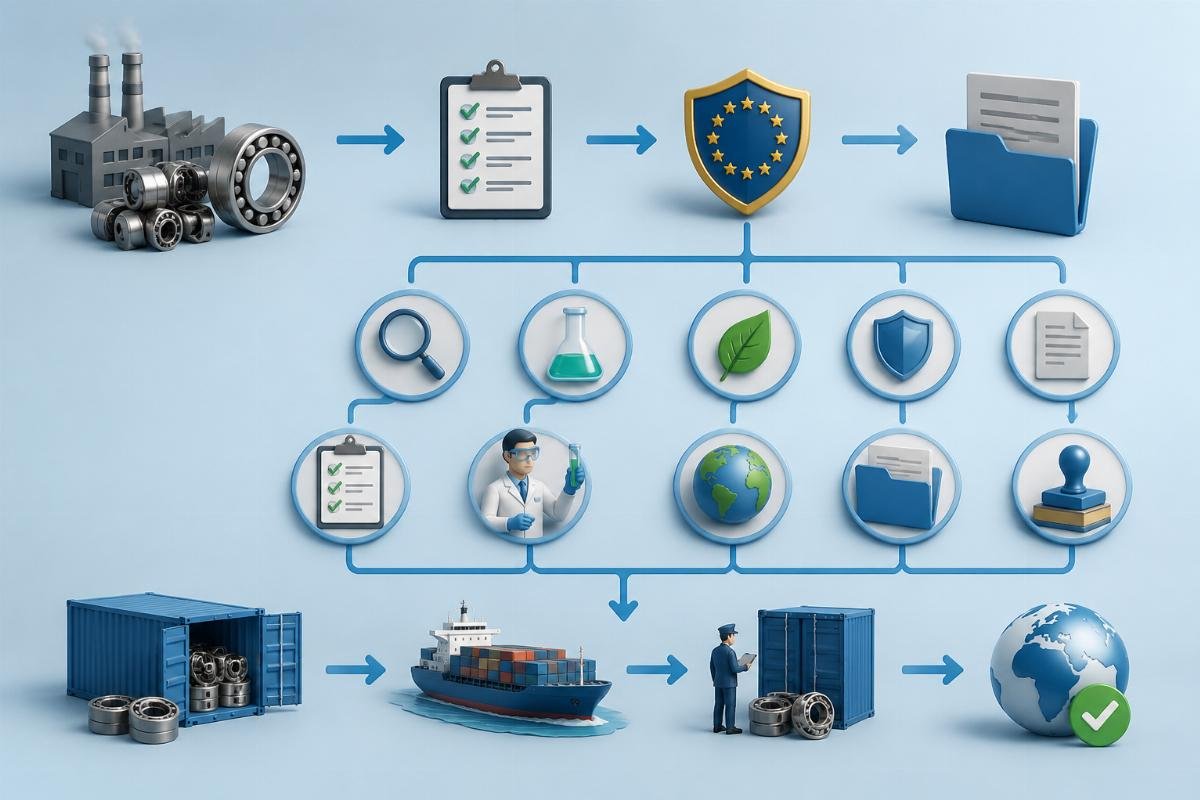
The risk清单 for non-compliance includes:
- Customs detention and extended testing delays
- Mandatory third-party laboratory testing at importer’s expense
- Potential rejection and return shipment costs
- Project timeline disruptions with cascading financial impact
How to Cross-Reference SKF Material Grades with DIN/EN/ASTM Standards?
Use official standard cross-reference tables and verify trace element limits, not just nominal composition.
The cross-reference process involves three verification layers:
Step 1: Identify the SKF material designation
Locate the exact SKF material code from product documentation or marking. Common examples include 100Cr6 for chrome steel, SUJ2 equivalents, and various stainless designations.
Step 2: Map to EN/ISO standard designation
Consult official cross-reference tables published by ISO, CEN, or national standards bodies. For example:
- SKF 100Cr6 maps to 100Cr6 (EN ISO 683-17)
- Carbon steel variants map to EN 10025 grades like S235JR or S355JR
- Stainless variants map to EN 10088 grades like X46Cr13
Step 3: Verify trace element limits
This is where most cross-reference errors occur. Different standards specify different maximum limits for:
- Sulfur content (affects machinability and fatigue life)
- Phosphorus content (affects brittleness)
- Oxygen content (affects inclusion density)
- Non-metallic inclusion ratings per ISO 4967
[NEED_CITE: ISO 4967 non-metallic inclusion rating methods for bearing steel]
| Standard System | Carbon Content Range | Chromium Range | Trace Element Control | Documentation Level |
|---|---|---|---|---|
| SKF Internal | Controlled range | Controlled range | Manufacturer specification | Internal certificate |
| DIN Standards | Specified range | Specified range | Standard limits | Type 2.1 certificate |
| EN Standards | Tight tolerance | Tight tolerance | Enhanced limits | Type 3.1 certificate |
| ASTM Standards | Specified range | Specified range | Regional limits | Mill test report |
A maintenance facility replacing old equipment bearings once matched SKF-NSK-FAG materials based solely on dimensional compatibility and nominal grade numbers. The replacement bearings failed prematurely because the trace element limits differed between standards, affecting fatigue resistance under their specific load conditions.
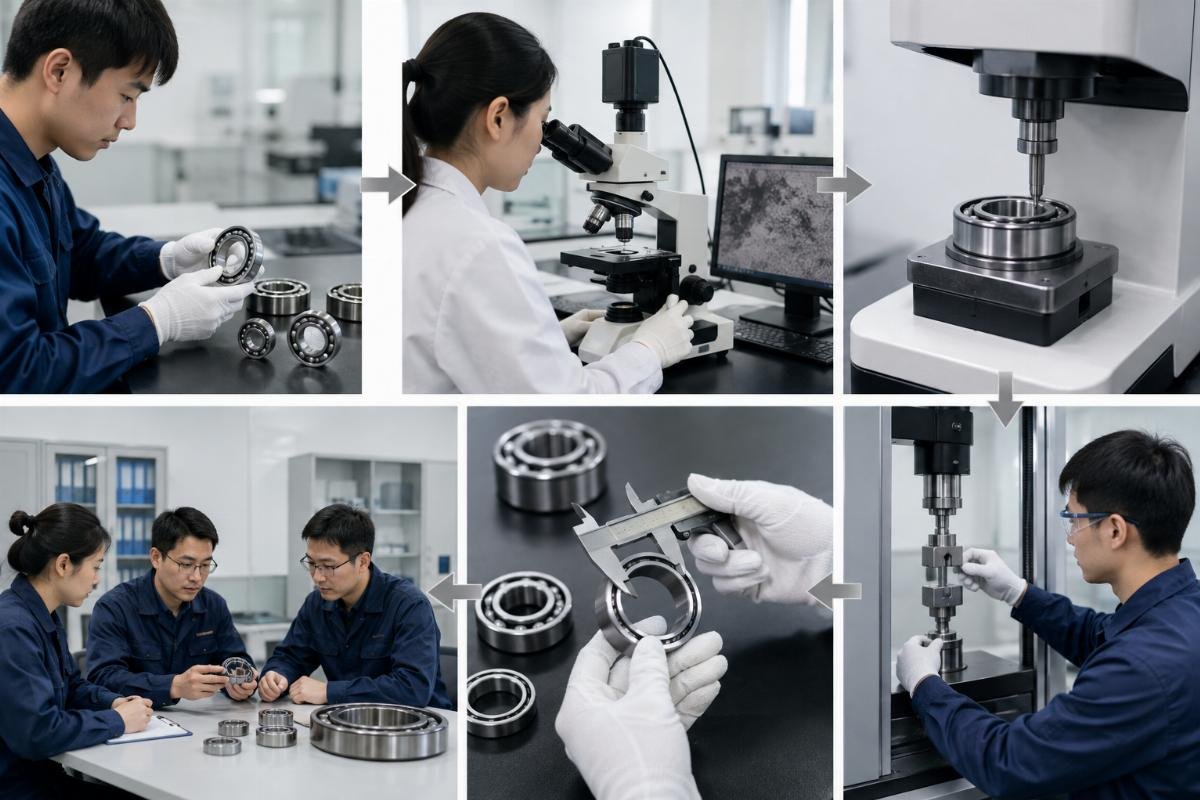
The solution is to request material test certificates that show actual chemical composition and inclusion ratings, not just standard designation compliance statements.
What Documents Do You Need to Verify SKF Material Authenticity and EU Compliance?
Complete documentation chain includes REACH certificates, material traceability certificates, origin proof, and authorized distributor verification.
The essential document package for SKF bearing materials entering the EU market includes:
Material Traceability Certificate (EN 10204 Type 3.1)
This document must include:
- Actual chemical composition from laboratory analysis
- Mechanical test results (hardness, tensile strength)
- Non-metallic inclusion ratings
- Heat number traceability to original melt
REACH Compliance Certificate
Third-party verification that the material complies with REACH Annex XVII restrictions, including:
- Substance restriction compliance statements
- SVHC (Substances of Very High Concern) screening results
- Supply chain communication documentation per REACH Article 33
[NEED_CITE: REACH Article 33 supply chain information requirements]
Certificate of Origin
Required for customs clearance and preferential tariff treatment under EU trade agreements. Must specify:
- Country of manufacture (not just country of export)
- Manufacturer identification
- Preferential origin criteria met
Authorized Distributor Verification
SKF maintains an authorized distributor network, and purchasing from unauthorized channels increases counterfeit risk. Verification includes:
- SKF authorization certificate with valid expiration date
- Distributor identification number
- Territory authorization scope

A European automotive parts distributor discovered that their "genuine" SKF bearings lacked proper material traceability when customs requested REACH documentation. The supplier could only provide commercial invoices, not third-party material certificates. Independent testing revealed the bearings did not meet SKF’s material specifications, indicating counterfeit products from an unauthorized source.
The document verification process should follow this sequence:
- Confirm supplier authorization status with SKF directly
- Request complete document package before order confirmation
- Verify document authenticity through issuing body contact
- Cross-check heat numbers and batch traceability
- Archive documents for customs audit requirements
How to Source Genuine SKF Bearings with Full EU Compliance from China?
Purchase through authorized channels with complete documentation chain to avoid counterfeit and compliance risks.
Sourcing SKF bearings from China requires navigating both authenticity verification and EU regulatory compliance simultaneously. The procurement process should include:
Authorized Channel Verification
- Confirm supplier appears on SKF’s official authorized distributor list
- Request authorization certificate and verify validity period
- Check supplier’s track record with EU market shipments
Pre-Shipment Documentation Review
Before shipment, verify:
- Material traceability certificates match purchase order specifications
- REACH compliance certificates are from accredited third-party laboratories
- Certificates of origin correctly identify manufacturing country
- All documents bear original signatures and official stamps
Quality Inspection Protocol
- Request pre-shipment samples for independent testing if order value justifies cost
- Verify packaging authenticity features (holograms, QR codes, serial numbers)
- Check bearing marking consistency with SKF specifications
- Confirm dimensional compliance with ISO tolerance standards
[NEED_CITE: SKF anti-counterfeit verification methods and authentication features]
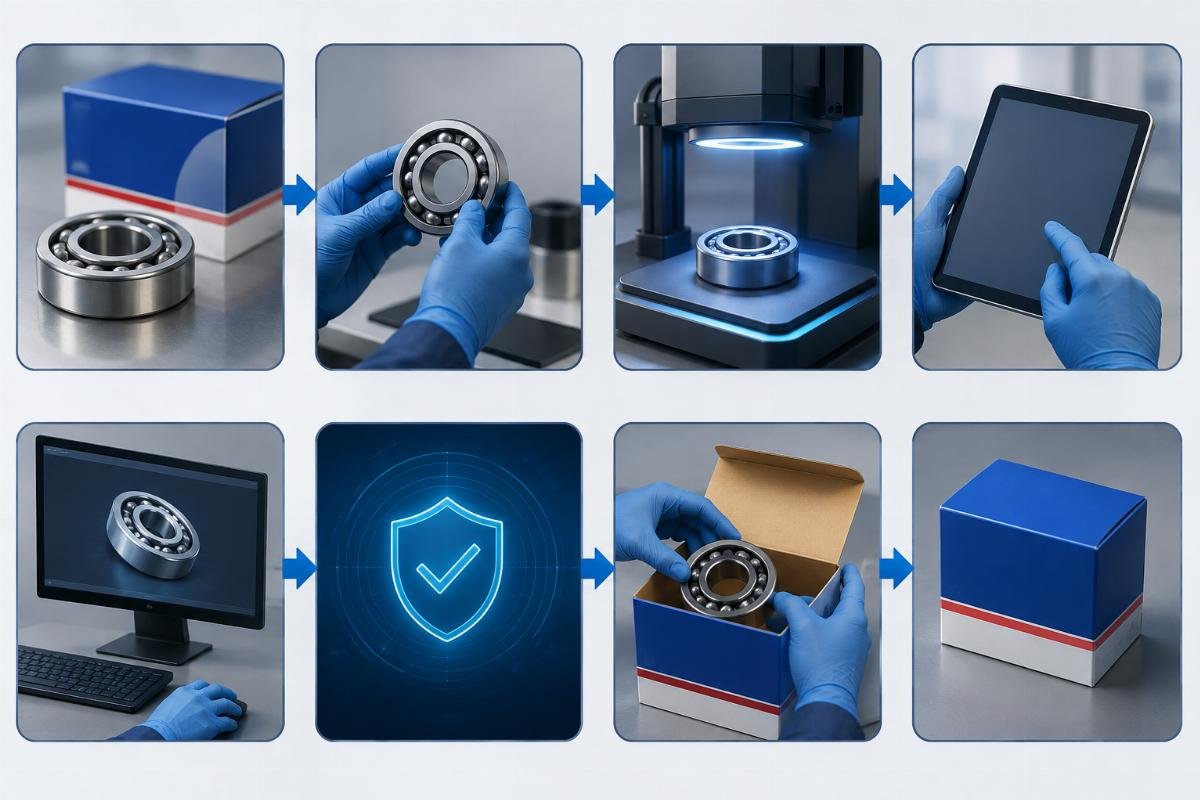
A Latin American industrial distributor learned this lesson when their first shipment from an unverified Chinese supplier contained bearings with incorrect material composition. The bearings passed visual inspection but failed hardness testing, revealing inferior steel quality. The replacement shipment from an authorized SKF distributor included complete documentation and passed all EU customs requirements on first submission.
The cost comparison between authorized and unauthorized sourcing must account for:
- Potential customs detention costs and delays
- Third-party testing fees for compliance verification
- Replacement bearing costs if counterfeits are discovered
- Project delay penalties from equipment downtime
- Reputation damage from supplying non-compliant products
Risk mitigation strategies include:
- Starting with trial orders before committing to large volumes
- Building relationships with multiple authorized suppliers
- Maintaining document archives for audit requirements
- Implementing incoming inspection procedures for all bearing shipments
- Training procurement staff on SKF authentication features
Conclusion
SKF bearing material grades require comprehensive EU compliance verification beyond simple牌号 matching.
The path from material specification to customs clearance involves understanding standard cross-references, securing third-party REACH documentation, and purchasing through authorized channels. European buyers prioritize complete documentation chains because regulatory compliance directly impacts project timelines and total cost of ownership. The difference between a successful import and a port detention often comes down to whether suppliers can provide verifiable material traceability certificates and REACH compliance reports, not just competitive pricing.



Leave a Reply